
Frenchie Training Tips: Your 2025 Guide to a Well-Behaved Companion
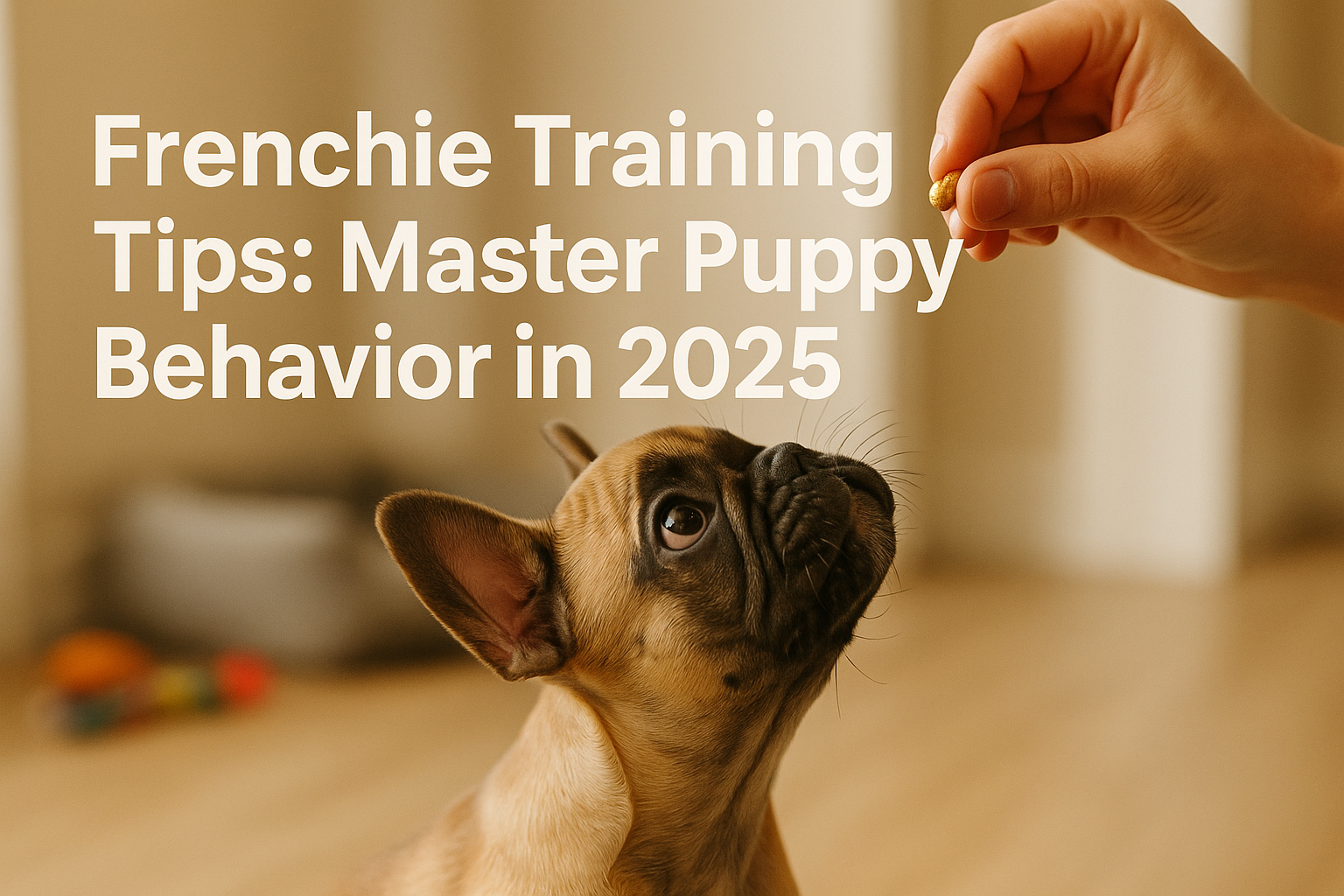
Bringing a French Bulldog puppy into your home is an incredibly exciting experience, but it also comes with the responsibility of guiding them to become well-behaved, happy members of your family. These charming, affectionate dogs are known for their playful personalities and distinctive looks. While their lovable nature often melts hearts, effective training from an early age is crucial. This comprehensive guide will equip you with essential Frenchie training tips to navigate the puppy stage and beyond, ensuring a smooth transition for both you and your new furry friend in 2025. Remember, consistency, patience, and positive reinforcement are the cornerstones of successful French Bulldog training.
Key Takeaways
- Start Early & Be Consistent: Begin training as early as 8 weeks old with short, frequent sessions (5-10 minutes) to leverage your Frenchie's natural curiosity and prevent bad habits from forming.
- Positive Reinforcement is Key: French Bulldogs are sensitive; use treats, praise, and toys to reward desired behaviors. Avoid harsh corrections, which can lead to anxiety.
- Establish Clear Boundaries: Define rules from day one and ensure all family members enforce them uniformly to prevent confusion.
- Master Essential Commands: Teach "sit," "stay," "come," "leave it," "down," and "heel" for safety and good manners, both at home and in public.
- Effective Potty & Crate Training: Implement a consistent potty schedule and use a properly sized crate as a safe, comfortable den to aid housebreaking and provide a secure space.
Laying the Foundation: Early Training and Positive Reinforcement for Your Frenchie
The journey to a well-behaved French Bulldog begins the moment they arrive home. For aspiring Frenchie owners, understanding that these intelligent but sometimes stubborn companions thrive on early intervention and positive reinforcement is paramount. When considering AKC Frenchie puppies, know that their early weeks are prime for learning.
The Importance of Starting Early (8 Weeks Old)
One of the most critical Frenchie training tips is to start training as early as 8 weeks old. This period is a golden window for puppies, as they are highly receptive to learning and establishing foundational behaviors. Delaying training can lead to more challenging situations down the line, as puppies will have already developed habits – good or bad. Think of it as building a house; a strong foundation ensures the entire structure is sound.
At 8 weeks, puppies are like sponges, soaking up information about their new world. This is the ideal time to introduce basic commands, house rules, and socialization experiences. Early training helps them understand their place in your family hierarchy and builds confidence.
Short, Frequent Training Sessions: The Frenchie Way
French Bulldogs, for all their charm, have relatively short attention spans, especially as puppies. This means marathon training sessions are counterproductive. Instead, opt for short, frequent training bursts of 5-10 minutes throughout the day.
Why short sessions?
- Maintains Attention: Your Frenchie will stay engaged and less likely to get bored or frustrated.
- Prevents Overwhelm: Too much information at once can be confusing for a young pup.
- Reinforces Learning: Repeating concepts in different contexts throughout the day helps solidify lessons.
- Builds Positive Association: Training becomes a fun, rewarding activity rather than a chore.
Aim for 3-5 short sessions daily, ideally when your puppy is alert and energetic but not overly excited or tired. Consistency in scheduling these mini-sessions is more effective than one long, drawn-out attempt.
The Power of Positive Reinforcement
French Bulldogs are incredibly sensitive dogs. They respond best to kindness, patience, and positive reinforcement. This means rewarding desired behaviors rather than punishing unwanted ones.
What is positive reinforcement? It's the act of adding something desirable to the environment (like a treat, praise, or a toy) when your Frenchie performs a desired action, making them more likely to repeat that action.
❌ Avoid: Yelling, scolding, hitting, or using harsh physical corrections. These methods can damage your bond, create fear, and lead to anxiety or aggression in your Frenchie.
✅ Embrace:
- High-Value Treats: Small, soft, delicious treats are excellent motivators. Think tiny pieces of cooked chicken, cheese, or specialized training treats.
- Verbal Praise: Enthusiastic words like "Good boy!" or "Yes!" in a happy tone.
- Affection: A gentle scratch behind the ears or a belly rub if your Frenchie enjoys it.
- Favorite Toys: A quick game of tug or fetch can be a powerful reward.
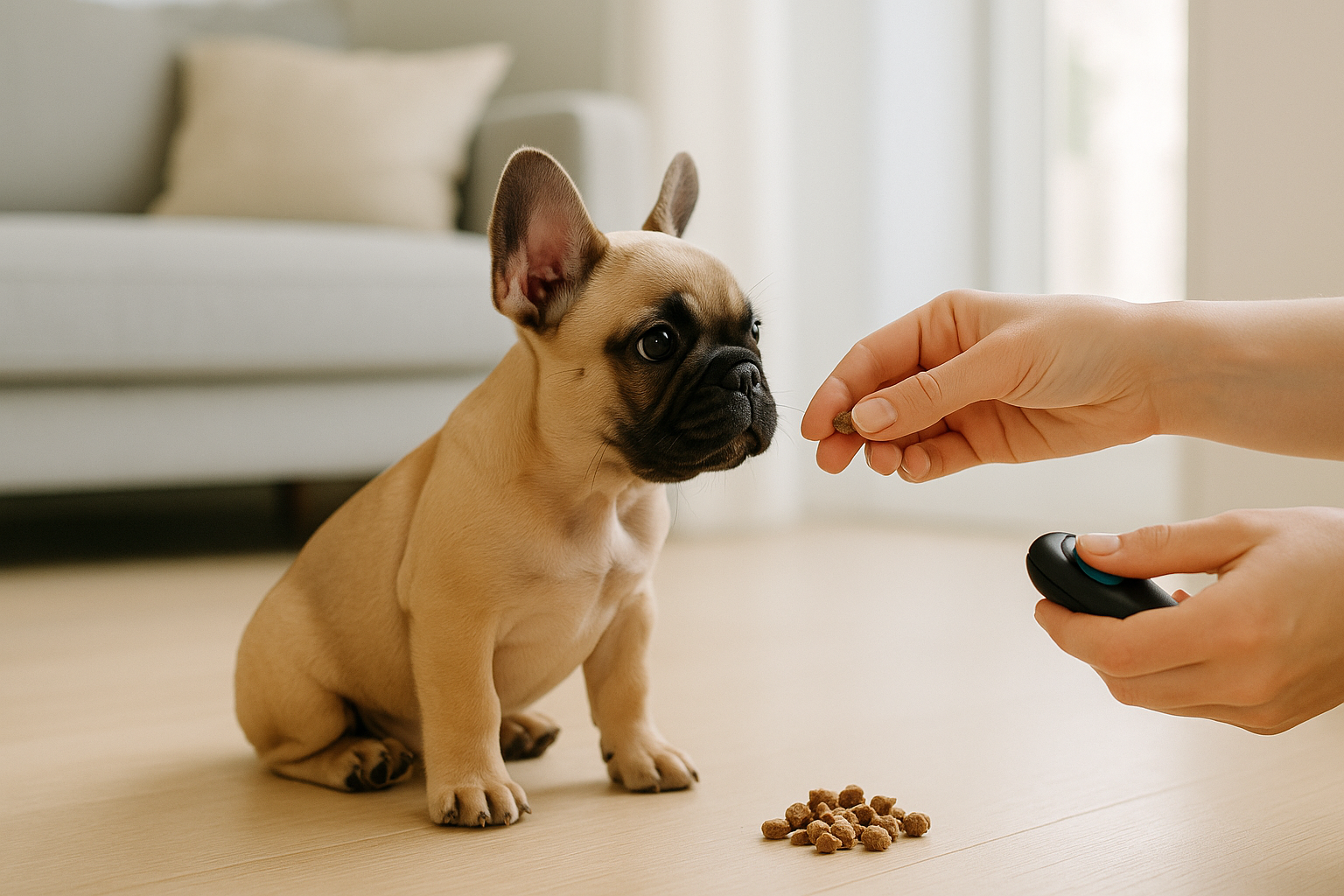
The key is to deliver the reward immediately (within 1-2 seconds) after the desired behavior occurs. This helps your Frenchie understand exactly what they did to earn the reward. A training clicker can be incredibly effective here, as it provides a precise, consistent marker for the exact moment your Frenchie performs correctly, followed immediately by a treat.
"Positive reinforcement is not just a training method; it's a way of communicating love and building trust with your Frenchie. It teaches them what to do, rather than just what not to do."
When looking for Frenchie puppies for sale, remember that a well-socialized and well-started puppy from a reputable breeder will have an easier time with training, further emphasizing the importance of ethical breeding practices.
Essential Frenchie Training Tips: Commands, Potty Training & Crate Setup
Once you've established the foundation of early, positive, and consistent training, it's time to delve into the specifics. These Frenchie training tips will focus on practical applications for common puppy challenges and crucial commands.
Establishing Clear Boundaries and Rules
Consistency is paramount in Frenchie training. From day one, establish clear boundaries and rules for your puppy. This means deciding:
- Where they will sleep (e.g., in their crate, not your bed initially).
- Where they are allowed and not allowed in the house.
- Whether they can jump on furniture.
- What toys are theirs and what items are off-limits.
It's vital that all family members consistently enforce the same rules. If one person allows a behavior and another doesn't, your Frenchie will become confused, leading to frustration for everyone and slower learning. Write down your "house rules" and share them with everyone who interacts with the puppy.
Essential Basic Commands
These commands are crucial for your Frenchie's safety, good manners, and your peace of mind. Practice each command in short bursts, focusing on one at a time until your Frenchie grasps it.
- "Sit": Hold a treat above your Frenchie's head, slowly moving it backward over their head. As their nose goes up, their bottom naturally lowers. As soon as their bottom touches the ground, say "Sit!" and immediately reward.
- "Stay": Start with your Frenchie in a "sit." Say "Stay" and take one step back. If they remain, immediately return and reward. Gradually increase distance and time.
- "Come": Use this command in a safe, enclosed area. Get down to their level, enthusiastically say "Come!" and back away, encouraging them with a treat or toy. When they come, reward heavily. This is vital for safety!
- "Leave It": This is a powerful command for preventing them from eating something dangerous or chewing on inappropriate items. Place a low-value treat on the floor and cover it with your hand. When your Frenchie sniffs or tries to get it, say "Leave it." The moment they look away from your hand, reward them with a high-value treat from your other hand. Gradually progress to leaving the treat uncovered.
- "Down": From a "sit" position, hold a treat at your Frenchie's nose and slowly move it towards the floor and away from them. As they stretch out to follow the treat, their body should lower. Say "Down!" and reward as soon as they are lying down.
- "Heel": This teaches your Frenchie to walk politely beside you on a leash without pulling. Start by rewarding them for being in the correct position next to your leg while you stand still. Then, take a few steps, rewarding when they stay beside you.
Remember, practice these commands in various environments and with increasing distractions as your Frenchie progresses. For more advanced training concepts, especially for specific colors like a blue Frenchie puppy for sale, consistency in these basics is the springboard.
Mastering Potty Training (Housebreaking)
Potty training requires vigilance and a predictable routine.
- Frequent Potty Breaks: Take your Frenchie puppy outside every 1-2 hours, especially after waking up, eating, drinking, and playing.
- Consistent Spot: Always take them to the same designated potty spot.
- Keyword: Use a consistent keyword like "Potty!" or "Go pee!" as you go outside.
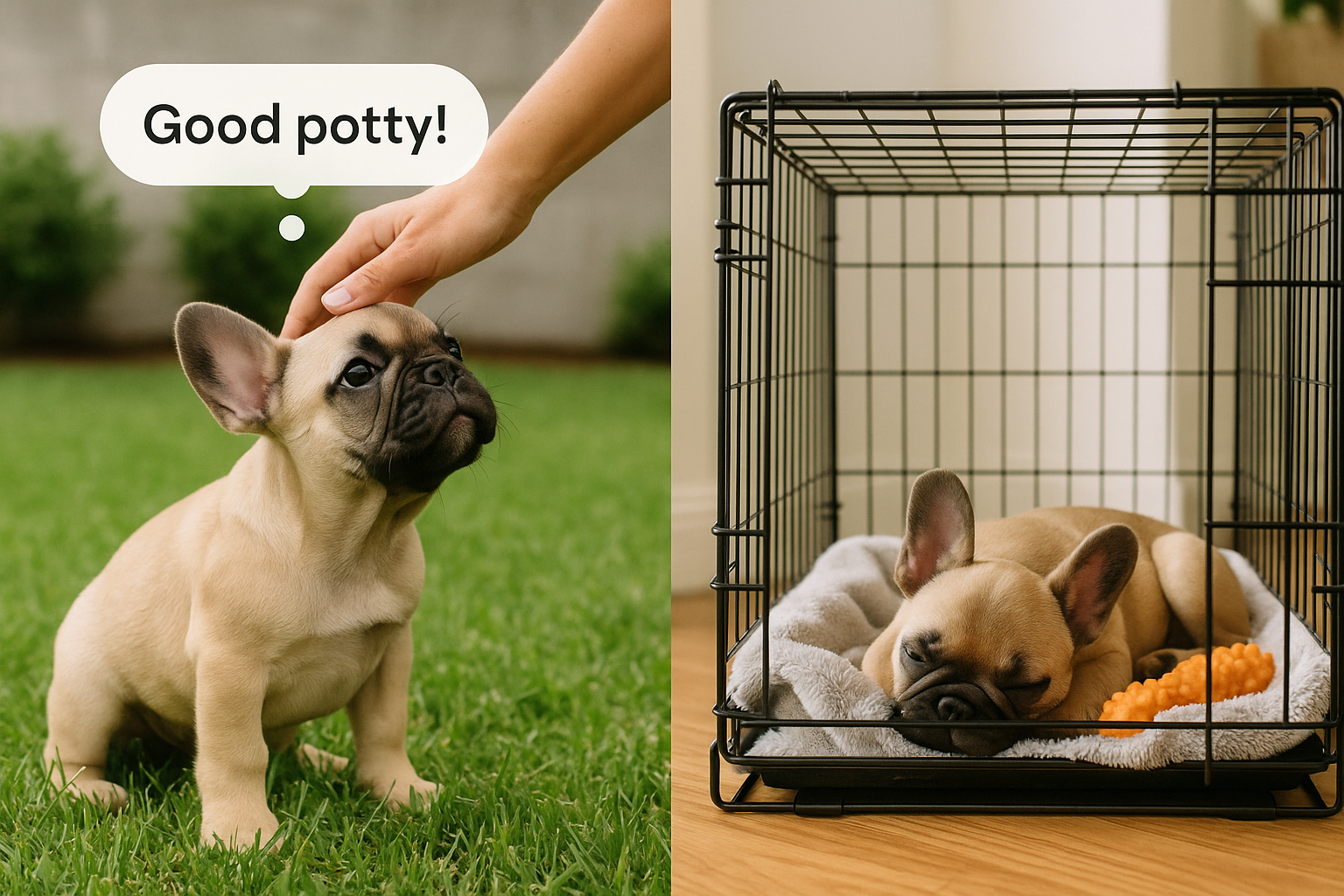
- Immediate Reward: The moment they successfully go to the bathroom, praise them enthusiastically and give a high-value treat. This immediate reward is crucial for them to connect the action with the reward.
- Watch for Signals: Learn to recognize your puppy's potty signals: sniffing the ground, circling, whining, or heading towards the door. Intercept these behaviors by gently redirecting them outside.
- Clean Accidents Thoroughly: If accidents happen indoors, clean them immediately with an enzymatic cleaner to eliminate odors that might attract your Frenchie back to the same spot. Never punish them for an accident; they won't understand.
Crate Training as a Housebreaking Tool
Crate training is one of the most effective tools for housebreaking and can provide your Frenchie with a safe, den-like space.
- The Den Instinct: Dogs naturally avoid soiling their sleeping area. A properly sized crate (just enough room to stand up, turn around, and lie down) leverages this instinct, encouraging them to hold their bladder.
- Positive Association: Never use the crate as punishment. Make it a positive place by feeding meals inside, offering special toys, and covering it with a blanket to create a cozy feel.
- Gradual Introduction: Start with short periods and gradually increase the time your Frenchie spends in the crate.
- Nighttime & When Away: The crate is invaluable for nighttime sleep and when you can't actively supervise your puppy.
For more information on French Bulldog care, including considerations for various colors like Lilac Frenchies, establishing a solid training routine from an early age will contribute to their overall well-being and adaptability.
Advanced Training & Addressing Common Frenchie Challenges
As your Frenchie grows and masters the basics, you might encounter specific challenges or wish to expand their training. These advanced Frenchie training tips aim to build on the foundation you've already established.
Socialization: A Lifelong Journey
While often thought of as an early puppy task, socialization is an ongoing process crucial for a well-adjusted Frenchie.
- Exposure to Variety: Continue exposing your Frenchie to various sights, sounds, people, and other dogs (once fully vaccinated and deemed safe by your vet).
- Positive Experiences: Ensure all these exposures are positive. If your Frenchie seems nervous, don't force them. Instead, create a comfortable distance and reward them for calmly observing.
- Puppy Classes: Enrolling in puppy obedience classes offers structured socialization and helps reinforce good manners in a controlled environment.
A well-socialized Frenchie is less likely to develop fear-based aggression or anxiety and will be a more pleasant companion in public settings, from parks to pet-friendly cafes.
Leash Training: Mastering the Walk
French Bulldogs are not typically endurance runners, but they do enjoy their walks. Leash training ensures these walks are enjoyable for both of you.
- Start Early with Collar/Harness: Introduce a lightweight collar or harness (Frenchies often do better with harnesses due to their brachycephalic nature) early on, allowing them to wear it for short periods before attaching a leash.
- Positive Association with Leash: Attach the leash and let them drag it around the house (under supervision!) for a few minutes, making it a normal object.
- Walks are for Walking: Begin with short walks around your yard or quiet street. Reward your Frenchie for walking calmly beside you without pulling.
- Change of Direction: If your Frenchie starts to pull, stop walking immediately. Only resume when the leash goes slack. You can also change direction abruptly; this teaches them to pay attention to you.
- Avoid Retractable Leashes: For training purposes, a standard 4-6 foot leash offers better control and communication.
Managing Nipping and Biting
Puppy nipping is natural, but it needs to be managed to prevent it from becoming a problem.
- Redirection: When your Frenchie nips, immediately redirect their attention to an appropriate chew toy.
- "Ouch!" Method: If the nip is too hard, let out a sharp "Ouch!" or "Yelp!" and immediately stop playing for a few seconds. This mimics how littermates communicate when play gets too rough. Resume play only when they are calmer.
- Consistency: Everyone in the household must use the same method consistently.
Addressing Barking and Chewing
- Barking: Frenchies aren't typically excessive barkers, but they can be vocal. Identify the trigger (boredom, attention-seeking, alarm). Address boredom with more mental stimulation and exercise. For attention-seeking barking, ignore it until they are quiet, then reward. For alarm barking, acknowledge the stimulus, reassure your Frenchie, and then redirect their focus.
- Chewing: Provide plenty of appropriate chew toys of varying textures and rotate them to keep things interesting. If they chew on something inappropriate, gently remove it, say "No," and immediately offer an appropriate chew toy. Bitter apple spray can deter chewing on furniture, but always supervise.
Understanding Frenchie Personality Traits in Training
French Bulldogs are known for their strong will and charming stubbornness.
- Patience is a Virtue: You will need a lot of patience. What works one day might not the next.
- Motivation: They are highly food-motivated, which is a great asset in training.
- Affectionate Nature: They crave human attention, so make training a bonding experience.
- Short Snouts (Brachycephalic): Be mindful of their breathing, especially during exercise or in warm weather. Keep training sessions brief and avoid overexertion.
- Sensitivity: Remember their sensitive nature. Positive reinforcement is not just a preference; it's essential for their emotional well-being.
For those interested in AKC Frenchie breeders in Florida or generally seeking information on the breed, understanding these inherent traits will greatly enhance your training success and overall relationship with your Frenchie. When looking for goldendoodle puppies for sale, similar principles of positive reinforcement and early socialization apply across breeds.
The Role of Reputable Breeders in Training Success
While effective Frenchie training tips are vital, the foundation for a well-adjusted French Bulldog often begins long before they come home with you. The choice of breeder plays a significant, often overlooked, role in your puppy's temperament, health, and readiness for training.
At Designer French Bulldogs, we pride ourselves on being the #1 AKC French Bulldog breeder. We are dedicated to producing healthy, well-socialized puppies that are eager to learn and ready to integrate seamlessly into their new homes. Our commitment extends to several crucial areas:
Structure, Health, and Longevity
A well-bred French Bulldog comes from a lineage of dogs chosen for excellent health, correct breed structure, and strong genetics. This isn't just about looks; it profoundly impacts their quality of life and trainability.
- Structure: Proper conformation (how their body is built) contributes to their ability to move comfortably and perform commands without pain. Issues like severe breathing difficulties, common in poorly bred brachycephalic dogs, can make training and even basic exercise challenging.
- Health: We prioritize extensive health screening for genetic conditions common in French Bulldogs. A healthy puppy is a happy puppy, less prone to discomfort that can manifest as behavioral issues or resistance to training. A healthy pup also means a longer, more active life for your companion.
- Longevity: Our breeding practices focus on robust health, aiming to give you a companion that will be with you for many happy years, actively participating in training and family life.
We believe that true AKC Frenchie breeders care deeply about the future of the breed, not just the current litter. This dedication ensures that when you get a puppy from us, you're bringing home a resilient, capable companion.
Early Socialization and Temperament
Puppies learn an incredible amount from their mother and littermates during their first 8 weeks. At Designer French Bulldogs, our puppies are raised in a stimulating home environment, exposed to various sounds, sights, and gentle handling from an early age.
- Positive Early Experiences: This early socialization ensures puppies develop confidence and resilience, making them more adaptable to new environments and less prone to fear or anxiety – factors that can hinder training.
- Temperament Matching: We carefully assess each puppy's temperament to help match them with the right family, ensuring a good fit that benefits both the puppy and the new owners. A puppy with a temperament suited to your lifestyle will be much easier to train and live with.
Our about us page highlights our philosophy and commitment to the breed.
Understanding French Bulldog Pricing
The price of a French Bulldog puppy reflects the significant investment a reputable breeder makes in health testing, quality care, proper nutrition, early socialization, and the time and effort involved in ethical breeding. When you see our French bulldog puppies for sale, you're investing in a healthy, well-started puppy.
Here’s a general guide to pricing, which can vary based on color, lineage, and specific traits:
| Color Category | Starting Price (USD, approx.) |
|---|---|
| Black | $3,000 |
| Cocoa | $3,500 |
| Blue | $4,500 |
| Lilac | $5,500 – $6,000 |
| Isabella | $7,000 |
| Rojo | $8,000 |
| Merle and Fluffy | Higher end, varies significantly |
These prices reflect the rarity of certain genetic color combinations and the rigorous breeding practices involved in producing healthy puppies of these specific traits. For example, a black merle French Bulldog puppy or a blue fluffy French Bulldog involves specialized breeding programs.
French Bulldog Colors Explained
French Bulldogs come in a stunning array of colors, each with its unique charm. Here’s a brief overview of some of the most sought-after variations you might find when searching for Frenchies for sale:
- Black: A solid, deep black coat, often with minimal or no brindle.
- Cocoa: A rich, chocolatey brown, lighter than black but darker than fawn. Often appears with lighter eyes.
- Blue: A dilute black, giving the coat a beautiful, soft grayish-blue hue. Blue French Bulldog puppies are highly popular.
- Lilac: A rarer dilute color, a combination of blue and cocoa genetics, resulting in a unique grayish-purple tone, often accompanied by green or amber eyes. Our lilac Frenchies are truly stunning.
- Isabella: One of the rarest and most striking colors, a dilute form of chocolate, appearing as a light, reddish-brown with green or blue eyes. A bond for life with an Isabella French Bulldog is a special experience.
- Rojo: A highly sought-after and specific red gene variant, often appearing as an intense red-chocolate color.
- Pied: A pattern where a base color (e.g., black, blue, fawn) is accompanied by large patches of white. For example, a blue pied Frenchie puppy.
- Brindle: A common pattern featuring streaks or stripes of a darker color (often black) over a lighter base coat (e.g., fawn, cream).
- Fawn: A light tan to reddish-brown color, ranging from very light cream to a darker red fawn.
- Cream: A solid, off-white to yellowish coat.
- Merle: A pattern characterized by patches of diluted color against a solid background, creating a mottled or speckled appearance. Blue merle French Bulldog puppies are quite distinctive.
- Fluffy: While not a color, "fluffy" refers to French Bulldogs with a longer, softer coat due to a specific recessive gene. A big rope fluffy Frenchie combines rare traits.
Each color and pattern adds to the unique charm of the French Bulldog, but regardless of coat, solid training practices are universal. We offer various French Bulldog clothes suitable for all colors and sizes.
When you invest in a puppy from a breeder who genuinely cares, like Designer French Bulldogs, you're setting yourself up for success in training and a long, joyful companionship with your Frenchie. Explore our AKC French Bulldog stud service for more insight into our commitment to responsible breeding. For those also interested in goldendoodle puppies for sale, we apply similar high standards of care and health to all our breeding programs.
Conclusion: Your Journey to a Well-Trained Frenchie in 2025
Embarking on the adventure of training a French Bulldog is a rewarding experience that deepens the bond between you and your cherished companion. By consistently applying these Frenchie training tips throughout 2025 and beyond, you are not just teaching commands; you are shaping a well-adjusted, confident, and happy member of your family.
Remember, the keys to success are:
- Early Intervention: Start training as soon as your Frenchie puppy comes home, ideally around 8 weeks old.
- Positive Reinforcement: Always use treats, praise, and toys to reward desired behaviors. Avoid punishment, which can harm your Frenchie's sensitive nature.
- Consistency: Maintain clear rules and a regular training schedule, ensuring all family members are on the same page.
- Patience and Understanding: French Bulldogs have their quirks. Some days will be more challenging than others. Approach each session with patience and a positive attitude.
- Short, Engaging Sessions: Keep training bursts to 5-10 minutes to match their attention span and keep them eager to learn.
A well-trained Frenchie is a joy to live with, capable of adapting to various situations and bringing immense happiness to your home. By choosing a reputable breeder like Designer French Bulldogs, you've already laid a strong foundation for a healthy and well-tempered puppy. The rest is a journey of consistent effort, endless love, and the joy of watching your Frenchie thrive.
Actionable Next Steps:
- Create a Training Schedule: Outline daily 5-10 minute training slots for basic commands.
- Prepare Training Supplies: Stock up on high-value treats, a clicker, and appropriate chew toys.
- Enroll in a Puppy Class: Seek out local positive reinforcement puppy obedience classes for structured learning and socialization.
- Review House Rules: Ensure all family members understand and commit to consistent rules for your Frenchie.
- Monitor Progress: Keep a mental (or written) log of your Frenchie's progress and adjust training as needed. Celebrate small victories!
Your dedication to these Frenchie training tips will undoubtedly lead to a harmonious and fulfilling life with your adorable French Bulldog.
<!DOCTYPE html>
<html lang="en">
<head>
    <meta charset="UTF-8">
    <meta name="viewport" content="width=device-width, initial-scale=1.0">
    <title>Frenchie Training Quiz</title>
    <style>
        .cg-element-quiz-container {
            font-family: Arial, sans-serif;
            max-width: 600px;
            margin: 20px auto;
            padding: 20px;
            border: 1px solid #ccc;
            border-radius: 8px;
            background-color: #f9f9f9;
            box-shadow: 0 2px 5px rgba(0,0,0,0.1);
        }
        .cg-element-quiz-title {
            text-align: center;
            color: #333;
            margin-bottom: 25px;
            font-size: 1.8em;
            border-bottom: 2px solid #ddd;
            padding-bottom: 10px;
        }
        .cg-element-question {
            margin-bottom: 20px;
            background-color: #fff;
            padding: 15px;
            border-radius: 6px;
            border: 1px solid #eee;
        }
        .cg-element-question p {
            font-weight: bold;
            margin-bottom: 10px;
            color: #555;
        }
        .cg-element-options label {
            display: block;
            margin-bottom: 8px;
            cursor: pointer;
            padding: 8px;
            border: 1px solid #e0e0e0;
            border-radius: 4px;
            transition: background-color 0.2s;
        }
        .cg-element-options label:hover {
            background-color: #eaf6ff;
        }
        .cg-element-options input[type="radio"] {
            margin-right: 8px;
        }
        .cg-element-submit-btn {
            display: block;
            width: 100%;
            padding: 12px 20px;
            background-color: #007bff;
            color: white;
            border: none;
            border-radius: 5px;
            font-size: 1.1em;
            cursor: pointer;
            margin-top: 25px;
            transition: background-color 0.3s ease;
        }
        .cg-element-submit-btn:hover {
            background-color: #0056b3;
        }
        .cg-element-result {
            margin-top: 20px;
            padding: 15px;
            border-radius: 6px;
            font-weight: bold;
            text-align: center;
            display: none; /* Hidden by default */
        }
        .cg-element-result.cg-element-correct {
            background-color: #d4edda;
            color: #155724;
            border: 1px solid #c3e6cb;
        }
        .cg-element-result.cg-element-incorrect {
            background-color: #f8d7da;
            color: #721c24;
            border: 1px solid #f5c6cb;
        }
        .cg-element-feedback {
            margin-top: 10px;
            font-size: 0.9em;
            color: #666;
            text-align: left;
            padding: 5px 0;
            border-top: 1px dashed #eee;
            margin-top: 15px;
            display: none;
        }
        .cg-element-show-answers-btn {
            display: block;
            width: 100%;
            padding: 10px;
            background-color: #6c757d;
            color: white;
            border: none;
            border-radius: 5px;
            font-size: 1em;
            cursor: pointer;
            margin-top: 15px;
            transition: background-color 0.3s ease;
        }
        .cg-element-show-answers-btn:hover {
            background-color: #5a6268;
        }
        .cg-element-correct-answer {
            color: green;
            font-weight: bold;
        }
        .cg-element-incorrect-answer {
            color: red;
        }

        @media (max-width: 600px) {
            .cg-element-quiz-container {
                margin: 10px;
                padding: 15px;
            }
            .cg-element-quiz-title {
                font-size: 1.5em;
            }
            .cg-element-submit-btn, .cg-element-show-answers-btn {
                font-size: 1em;
                padding: 10px 15px;
            }
        }
    </style>
</head>
<body>
    <div class="cg-element-quiz-container">
        <h2 class="cg-element-quiz-title">Test Your Frenchie Training Knowledge!</h2>

        <div class="cg-element-question" id="cg-element-q1">
            <p>1. At what age should you ideally start training your French Bulldog puppy?</p>
            <div class="cg-element-options">
                <label><input type="radio" name="q1" value="a"> 6 months old</label>
                <label><input type="radio" name="q1" value="b"> 8 weeks old</label>
                <label><input type="radio" name="q1" value="c"> 1 year old</label>
                <label><input type="radio" name="q1" value="d"> Only after they're fully potty trained</label>
            </div>
            <div class="cg-element-feedback" data-answer="b">
                Correct! Starting at 8 weeks capitalizes on their early learning window.
            </div>
        </div>

        <div class="cg-element-question" id="cg-element-q2">
            <p>2. What is the recommended length for a single Frenchie training session?</p>
            <div class="cg-element-options">
                <label><input type="radio" name="q2" value="a"> 30-45 minutes</label>
                <label><input type="radio" name="q2" value="b"> 15-20 minutes</label>
                <label><input type="radio" name="q2" value="c"> 5-10 minutes</label>
                <label><input type="radio" name="q2" value="d"> As long as they remain focused</label>
            </div>
            <div class="cg-element-feedback" data-answer="c">
                That's right! Frenchies have short attention spans, so short, frequent sessions are best.
            </div>
        </div>

        <div class="cg-element-question" id="cg-element-q3">
            <p>3. Which training method is most effective and recommended for French Bulldogs?</p>
            <div class="cg-element-options">
                <label><input type="radio" name="q3" value="a"> Punishment and scolding</label>
                <label><input type="radio" name="q3" value="b"> Only verbal corrections</label>
                <label><input type="radio" name="q3" value="c"> Positive reinforcement with treats and praise</label>
                <label><input type="radio" name="q3" value="d"> Letting them figure things out on their own</label>
            </div>
            <div class="cg-element-feedback" data-answer="c">
                Excellent! Positive reinforcement builds trust and encourages good behavior without causing anxiety.
            </div>
        </div>

        <div class="cg-element-question" id="cg-element-q4">
            <p>4. What is a key benefit of using a crate for Frenchie potty training?</p>
            <div class="cg-element-options">
                <label><input type="radio" name="q4" value="a"> It teaches them to hold their bladder due to their natural instinct not to soil their sleeping area.</label>
                <label><input type="radio" name="q4" value="b"> It serves as a punishment area for accidents.</label>
                <label><input type="radio" name="q4" value="c"> It makes them sleep longer.</label>
                <label><input type="radio" name="q4" value="d"> It replaces the need for outdoor potty breaks.</label>
            </div>
            <div class="cg-element-feedback" data-answer="a">
                Correct! Crates are great for housebreaking by leveraging a dog's natural clean den instinct.
            </div>
        </div>

        <button class="cg-element-submit-btn" onclick="submitQuiz()">Submit Answers</button>
        <div class="cg-element-result" id="cg-element-quiz-result"></div>
        <button class="cg-element-show-answers-btn" onclick="showAnswers()" style="display: none;">Show Explanations</button>

    </div>

    <script>
        const cgElementCorrectAnswers = {
            q1: "b",
            q2: "c",
            q3: "c",
            q4: "a"
        };

        function submitQuiz() {
            let score = 0;
            const quizQuestions = document.querySelectorAll('.cg-element-question');
            const resultDiv = document.getElementById('cg-element-quiz-result');
            let allAnswered = true;

            quizQuestions.forEach(question => {
                const questionName = question.id.replace('cg-element-', '');
                const selectedOption = document.querySelector(`input[name="${questionName}"]:checked`);
                const feedbackDiv = question.querySelector('.cg-element-feedback');

                // Reset styles
                const labels = question.querySelectorAll('label');
                labels.forEach(label => {
                    label.style.backgroundColor = '';
                    label.style.color = '';
                    label.classList.remove('cg-element-correct-answer', 'cg-element-incorrect-answer');
                });
                feedbackDiv.style.display = 'none'; // Hide feedback initially

                if (selectedOption) {
                    const userAnswer = selectedOption.value;
                    if (userAnswer === cgElementCorrectAnswers[questionName]) {
                        score++;
                        selectedOption.parentElement.style.backgroundColor = '#e0ffe0';
                        selectedOption.parentElement.classList.add('cg-element-correct-answer');
                    } else {
                        selectedOption.parentElement.style.backgroundColor = '#ffe0e0';
                        selectedOption.parentElement.classList.add('cg-element-incorrect-answer');
                    }
                } else {
                    allAnswered = false;
                }
            });

            if (!allAnswered) {
                resultDiv.textContent = "Please answer all questions before submitting.";
                resultDiv.className = 'cg-element-result cg-element-incorrect';
                resultDiv.style.display = 'block';
                return;
            }

            resultDiv.textContent = `You scored ${score} out of ${Object.keys(cgElementCorrectAnswers).length}!`;
            resultDiv.className = `cg-element-result ${score === Object.keys(cgElementCorrectAnswers).length ? 'cg-element-correct' : 'cg-element-incorrect'}`;
            resultDiv.style.display = 'block';

            document.querySelector('.cg-element-show-answers-btn').style.display = 'block';
            document.querySelector('.cg-element-submit-btn').style.display = 'none';
        }

        function showAnswers() {
            const quizQuestions = document.querySelectorAll('.cg-element-question');
            quizQuestions.forEach(question => {
                const questionName = question.id.replace('cg-element-', '');
                const feedbackDiv = question.querySelector('.cg-element-feedback');
                const labels = question.querySelectorAll('label');

                labels.forEach(label => {
                    const input = label.querySelector('input');
                    if (input.value === cgElementCorrectAnswers[questionName]) {
                        label.style.backgroundColor = '#d4edda'; /* Light green for correct */
                        label.style.color = '#155724';
                        label.classList.add('cg-element-correct-answer');
                    } else if (input.checked && input.value !== cgElementCorrectAnswers[questionName]) {
                         label.style.backgroundColor = '#f8d7da'; /* Light red for incorrect selected */
                         label.style.color = '#721c24';
                         label.classList.add('cg-element-incorrect-answer');
                    } else {
                        label.style.backgroundColor = '';
                        label.style.color = '';
                        label.classList.remove('cg-element-correct-answer', 'cg-element-incorrect-answer');
                    }
                });
                feedbackDiv.style.display = 'block';
            });
            document.querySelector('.cg-element-show-answers-btn').style.display = 'none';
        }
    </script>
</body>
</html>
SEO Meta Title: Frenchie Training Tips 2025: Your Guide to a Well-Behaved French Bulldog
SEO Meta Description: Master Frenchie training in 2025 with our expert tips! Learn positive reinforcement, potty training, and essential commands for your French Bulldog puppy.