

Last updated: March 15, 2026
Quick Answer: A blue merle Frenchie is a French Bulldog carrying the merle gene (M) combined with the blue dilute gene (d/d), producing a mottled silver-gray, black, and blue coat with striking pale or blue eyes. These dogs share the same affectionate, adaptable temperament as standard French Bulldogs but carry specific genetic health considerations buyers must understand before purchasing. In 2026, blue merle French Bulldogs typically sell for $5,000 to $15,000 or more depending on bloodlines, structure, and registration.
Key Takeaways
- 🐾 The blue merle Frenchie gets its coat from two genes working together: the merle gene (M) and the blue dilute gene (d/d).
- 💰 Prices range from $5,000 to $15,000+, with top-bloodline dogs reaching higher; exotic French Bulldog colors broadly sell for $3,000–$30,000+ [1].
- ⚠️ Double merle (M/M) breeding causes serious health defects — always verify a puppy carries only one merle allele (M/m).
- 👁️ Blue merle Frenchies often have blue, green, or heterochromatic eyes — a direct result of the merle gene’s effect on pigmentation.
- 🧬 DNA testing from both parents is non-negotiable; reputable breeders provide full panel results before any deposit.
- 🏆 The AKC does not recognize merle as a standard French Bulldog color, but AKC registration is still possible under “non-standard” color codes.
- 🐶 Temperament is identical to standard Frenchies: playful, loyal, low-exercise, and apartment-friendly.
- 📋 Health screening should include BAER hearing test, ophthalmologic exam, and standard Frenchie respiratory evaluation.
- 🔗 Finding a reputable breeder requires checking health guarantees, parent DNA results, and in-person or video visits.
- 📅 The French Bull Dog Club of America’s 2026 National Specialty Week (November 1–7) is a good opportunity to meet ethical breeders [4].
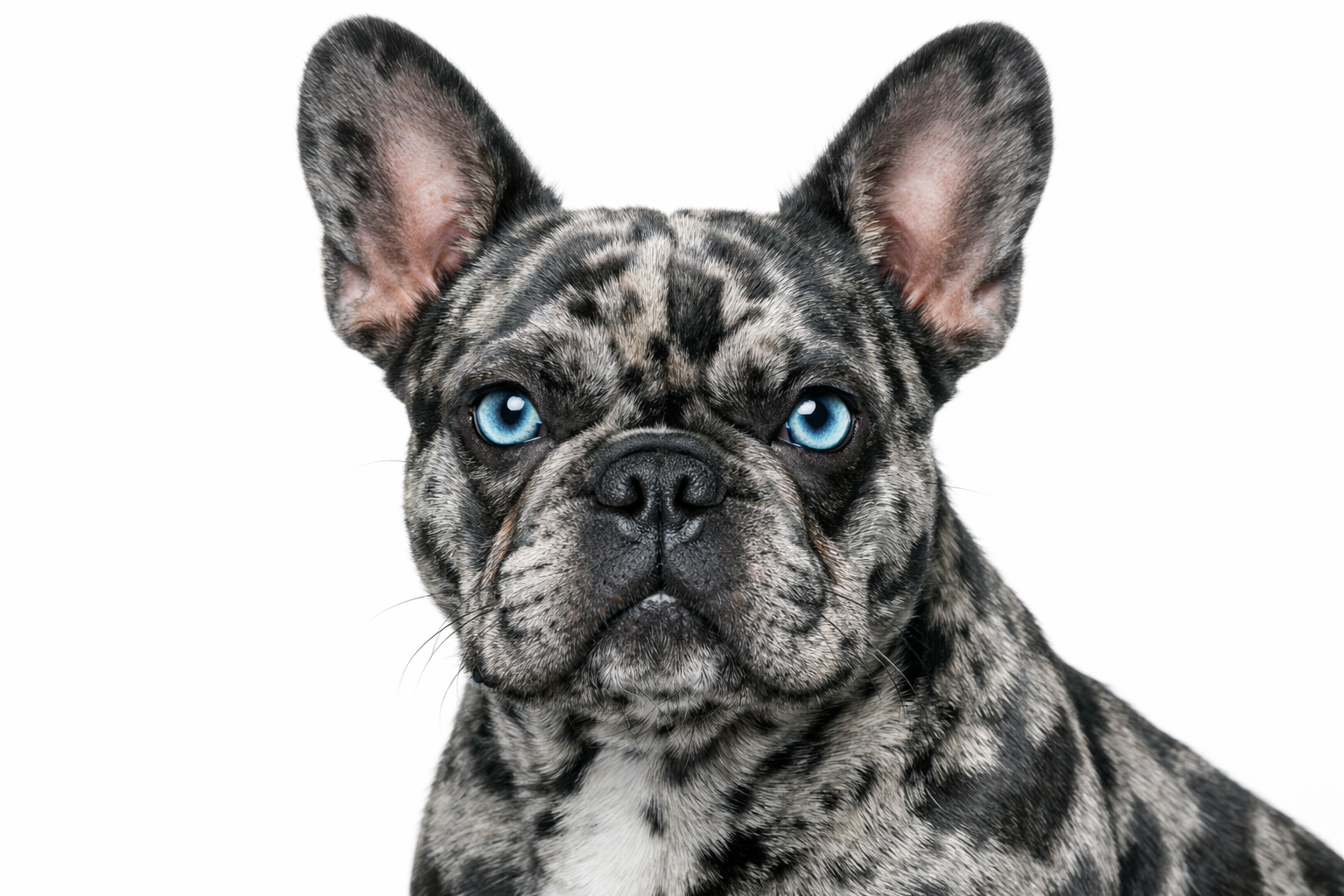
What Exactly Is a Blue Merle Frenchie?
A blue merle Frenchie is a French Bulldog that carries both the merle gene and the blue dilute gene, resulting in a patchy, marbled coat in shades of silver, gray, black, and sometimes cream. The combination is visually dramatic and genetically specific — it’s not simply a color dye or coat treatment.
Breaking down the genetics:
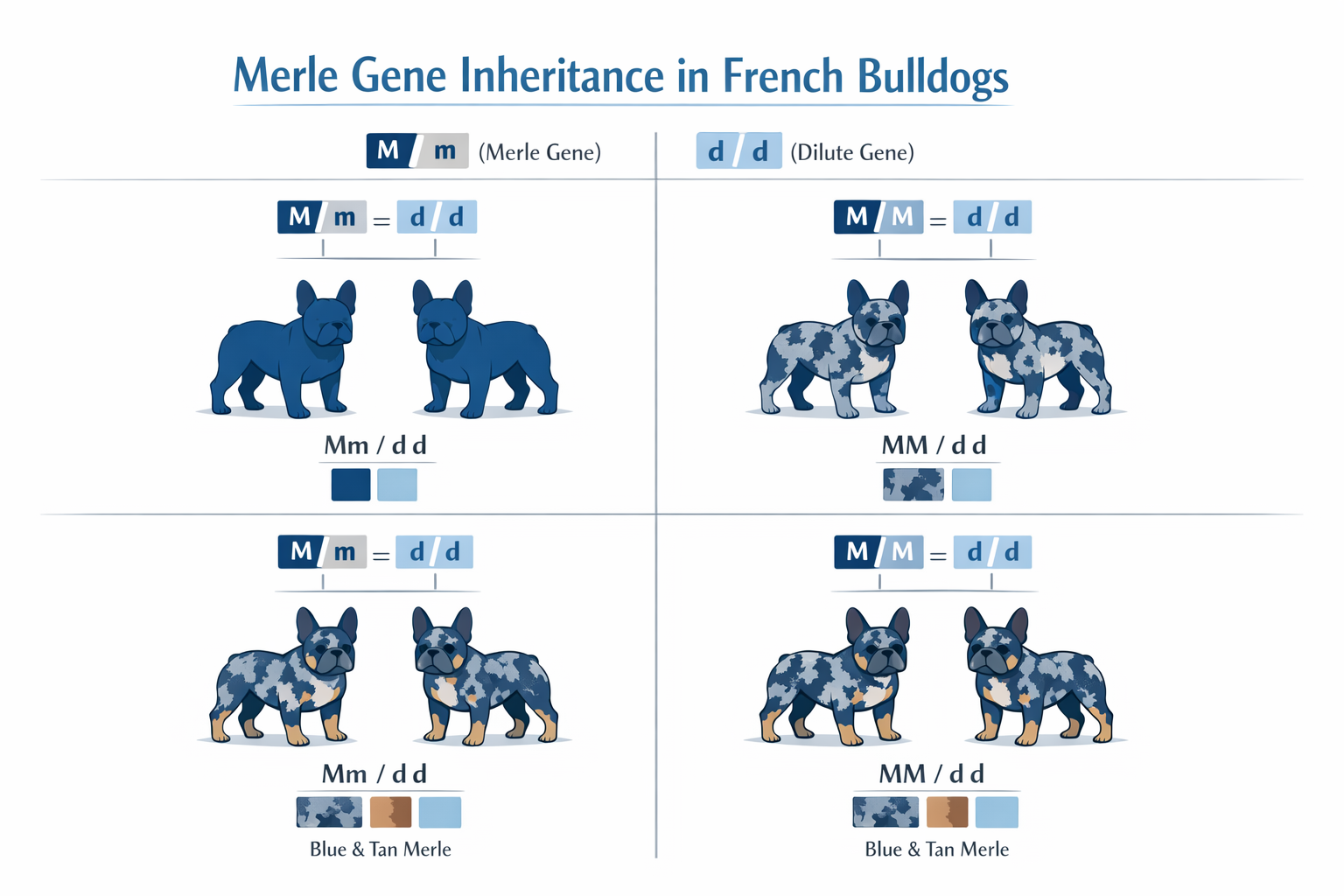
- Merle gene (M locus): The merle allele (M) dilutes random sections of pigment, creating irregular patches of lighter color against a darker base.
- Blue dilute gene (d locus): Two copies of the dilute allele (d/d) shift black pigment to a blue-gray tone. Without this, the dog would be a standard black merle instead.
- Result: When M/m meets d/d, you get the characteristic blue merle pattern — silver-gray patches on a blue-gray base, often with blue or pale green eyes.
“The blue merle coat is not just a color — it’s the visible expression of two separate genetic events happening in the same dog.”
What this looks like in practice:
| Feature | Blue Merle Frenchie | Standard Blue Frenchie |
|---|---|---|
| Base coat | Mottled silver-gray and black | Solid blue-gray |
| Eye color | Often blue, green, or odd-eyed | Usually dark brown |
| Nose color | Blue-gray or butterfly | Solid blue-gray |
| Gene combination | M/m + d/d | m/m + d/d |
| Price range (2026) | $5,000–$15,000+ | $3,500–$8,000 |
For a deeper look at this color variation, see our complete blue merle French Bulldog guide.
No products found which match your selection.
How Does the Blue Merle Frenchie Differ From Other Merle Colors?
The merle pattern appears across several French Bulldog color bases, and each produces a visually distinct dog. The blue merle is one of the most sought-after, but it’s worth understanding how it compares to related variations.
Common merle French Bulldog color types:
- Blue merle: Silver-gray and black patches, blue dilute base, often blue eyes.
- Blue and tan merle: Same blue merle base with tan point markings above the eyes, on the chest, and paws.
- Lilac merle: Carries both blue dilute (d/d) and chocolate (b/b), producing a pale lavender-gray merle coat.
- Black merle: Merle on a standard black base without the blue dilute gene.
- Rojo merle: Merle expressed on a red or fawn base, producing warm copper-toned patches.
- Isabella merle: A “triple dilute” variation combining blue, chocolate, and sometimes additional dilution for an extremely pale, rosy-gold coat [2].
Choose blue merle if: You want a dramatic, high-contrast coat with a cool-toned palette and the possibility of striking blue eyes, without the additional genetic complexity of lilac or isabella.
Choose lilac or isabella merle if: You prefer the rarest, palest color expressions and are prepared for the higher price points and more limited breeder availability those colors command.
What Are the Health Risks Every Blue Merle French Bulldog Buyer Must Know?
Blue merle Frenchies carry the same brachycephalic (flat-faced) health concerns as all French Bulldogs, plus merle-specific risks that require additional screening. Understanding both categories before buying is essential.
Merle-Specific Health Concerns
The merle gene affects pigmentation throughout the body, including the inner ear and eyes. The most serious risk arises from double merle breeding (M/M), where two merle-carrying dogs are bred together.
Double merle risks include:
- Partial or complete deafness (one or both ears)
- Microphthalmia (abnormally small eyes)
- Increased sensitivity to light
- Blindness
A responsible breeder will never produce a double merle intentionally. Always ask for the sire and dam’s DNA results confirming each parent carries at most one merle allele (M/m, not M/M).
Required health tests for blue merle French Bulldog puppies:
- BAER test (Brainstem Auditory Evoked Response) — checks hearing in each ear independently.
- CAER ophthalmologic exam — screens for eye abnormalities linked to the merle gene.
- Full color panel DNA test — confirms merle zygosity and other color genes.
- OFA or equivalent hip/spine evaluation — relevant for all Frenchies.
Brachycephalic Health Concerns (All Frenchies)
French Bulldogs as a breed are prone to Brachycephalic Obstructive Airway Syndrome (BOAS), spinal issues (IVDD), and skin fold dermatitis. These risks apply equally to blue merle dogs. For a full overview, see our guide to French Bulldog health issues.
Common mistake: Buyers focus so heavily on coat color that they skip structural evaluation. A properly structured dog with good airway anatomy will have a better quality of life regardless of color. Learn more about what properly structured French Bulldogs look like before you commit.
How Much Does a Blue Merle French Bulldog Cost in 2026?
Blue merle French Bulldogs are among the more expensive exotic Frenchie colors, with prices in 2026 typically falling between $5,000 and $15,000. Top-bloodline dogs with exceptional structure and rare color combinations can exceed this range. Across the exotic French Bulldog market broadly, pricing spans $3,000 to $30,000+ depending on bloodlines and rarity [1].
What drives the price up:
- Color rarity: Blue and tan merle or blue merle with full blue eyes commands more than a standard blue merle.
- Bloodline quality: Dogs from proven champion or health-tested lines cost more.
- Registration type: Full AKC registration typically costs more than limited registration.
- Breeder reputation: Established breeders with health guarantees and genetic testing charge appropriately for that investment.
- Structural quality: A dog with excellent airway anatomy and correct conformation is worth more long-term.
Estimated 2026 price ranges:
| Blue Merle Variation | Estimated Price Range |
|---|---|
| Standard blue merle | $5,000–$9,000 |
| Blue and tan merle | $7,000–$12,000 |
| Blue merle with blue eyes | $8,000–$15,000 |
| Blue merle fluffy | $10,000–$20,000+ |
If budget is a concern, some breeders offer financing options. See our French Bulldog finance options for details.
How to Find a Reputable Blue Merle Frenchie Breeder
Finding a trustworthy breeder is the single most important step in getting a healthy blue merle French Bulldog. The exotic Frenchie market has a higher-than-average number of irresponsible sellers because the profit margins attract bad actors.
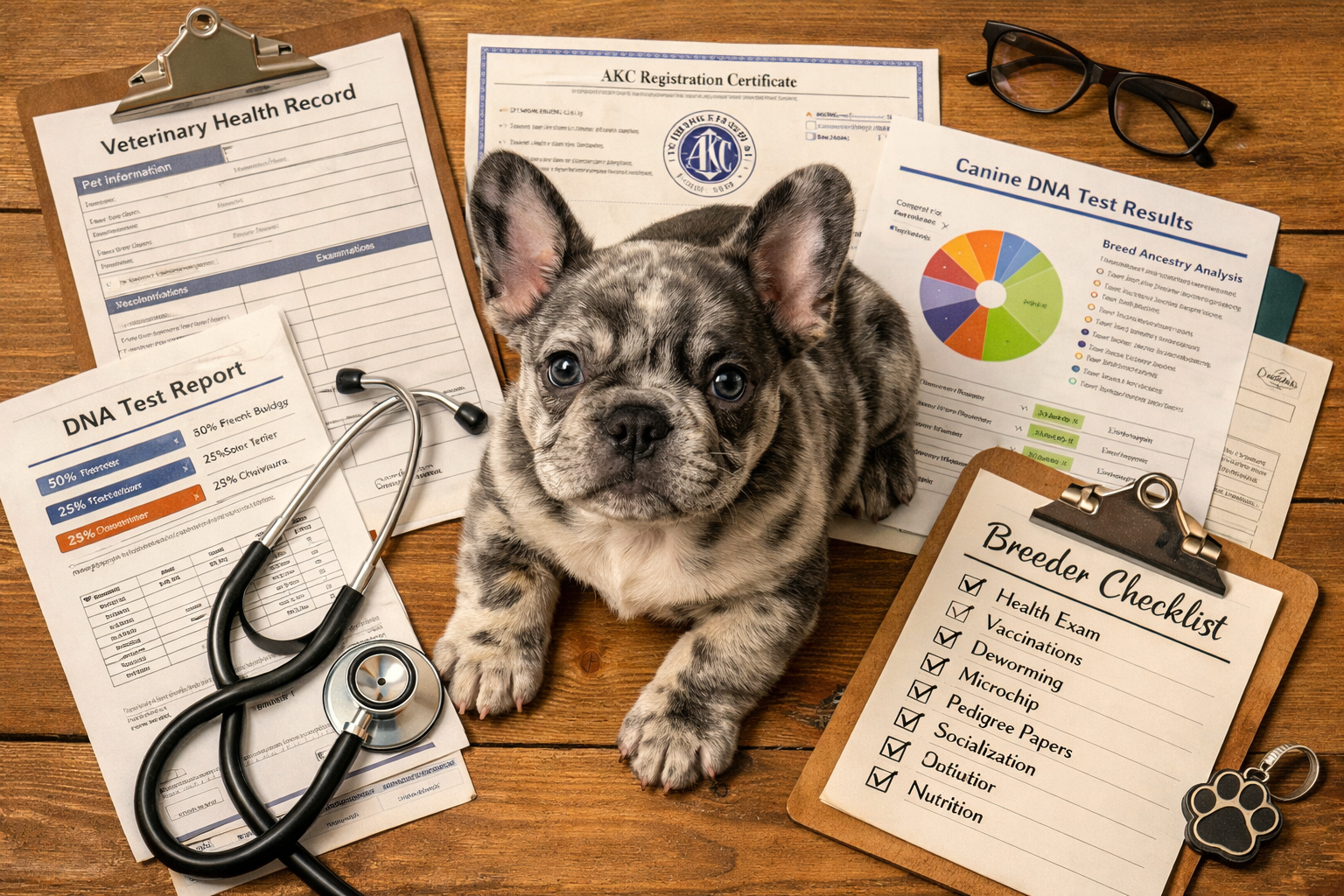
What a reputable breeder will always provide:
- DNA test results for both parents (color panel + merle zygosity)
- BAER hearing test results for merle puppies
- Health guarantee in writing (minimum 1–2 years for genetic conditions)
- References from previous buyers
- Photos or video of the puppy’s living environment
- Willingness to answer questions before and after purchase
Red flags to walk away from:
- No DNA testing available for parents
- Pressure to pay a deposit immediately
- Prices that seem too low for the color (under $3,000 for a “blue merle”)
- No health guarantee or vague verbal promises only
- Refusal to show the dam in person or on video
For vetted breeder resources, our blue merle Frenchie breeder professional playbook covers what to ask and what to expect at each stage of the process.
The French Bull Dog Club of America’s 2026 National Specialty Week (November 1–7, 2026) is also an excellent place to meet breeders in person and evaluate dogs against breed standards [4].
What Is It Like to Own a Blue Merle Frenchie Day to Day?
The blue merle French Bulldog’s temperament is identical to any other Frenchie: affectionate, playful, moderately stubborn, and highly adaptable to apartment or house living. The coat color has no effect on personality.
Daily life with a blue merle Frenchie:
- Exercise: 20–30 minutes of moderate activity per day is sufficient. Avoid intense exercise in heat or humidity due to brachycephalic airway limitations.
- Grooming: Short coat requires minimal grooming — weekly brushing and regular cleaning of facial skin folds.
- Training: Frenchies respond well to positive reinforcement. They can be food-motivated but also stubborn, so short, consistent sessions work best.
- Socialization: Early socialization is important for any Frenchie. Expose puppies to different people, sounds, and environments during the critical 8–16 week window.
- Climate: Blue merle Frenchies are sensitive to heat. Air conditioning is not optional in warm climates — it’s a necessity.
Who this breed is ideal for:
- Apartment dwellers or those without a yard
- Families with children (Frenchies are generally gentle)
- First-time dog owners who can commit to health monitoring
- People who work from home or have flexible schedules
Who should reconsider:
- Very active owners wanting a running or hiking companion
- Households in extreme heat climates without reliable air conditioning
- Anyone unwilling to budget for potential veterinary costs
Blue Merle Frenchie Puppies: What to Expect in the First Year
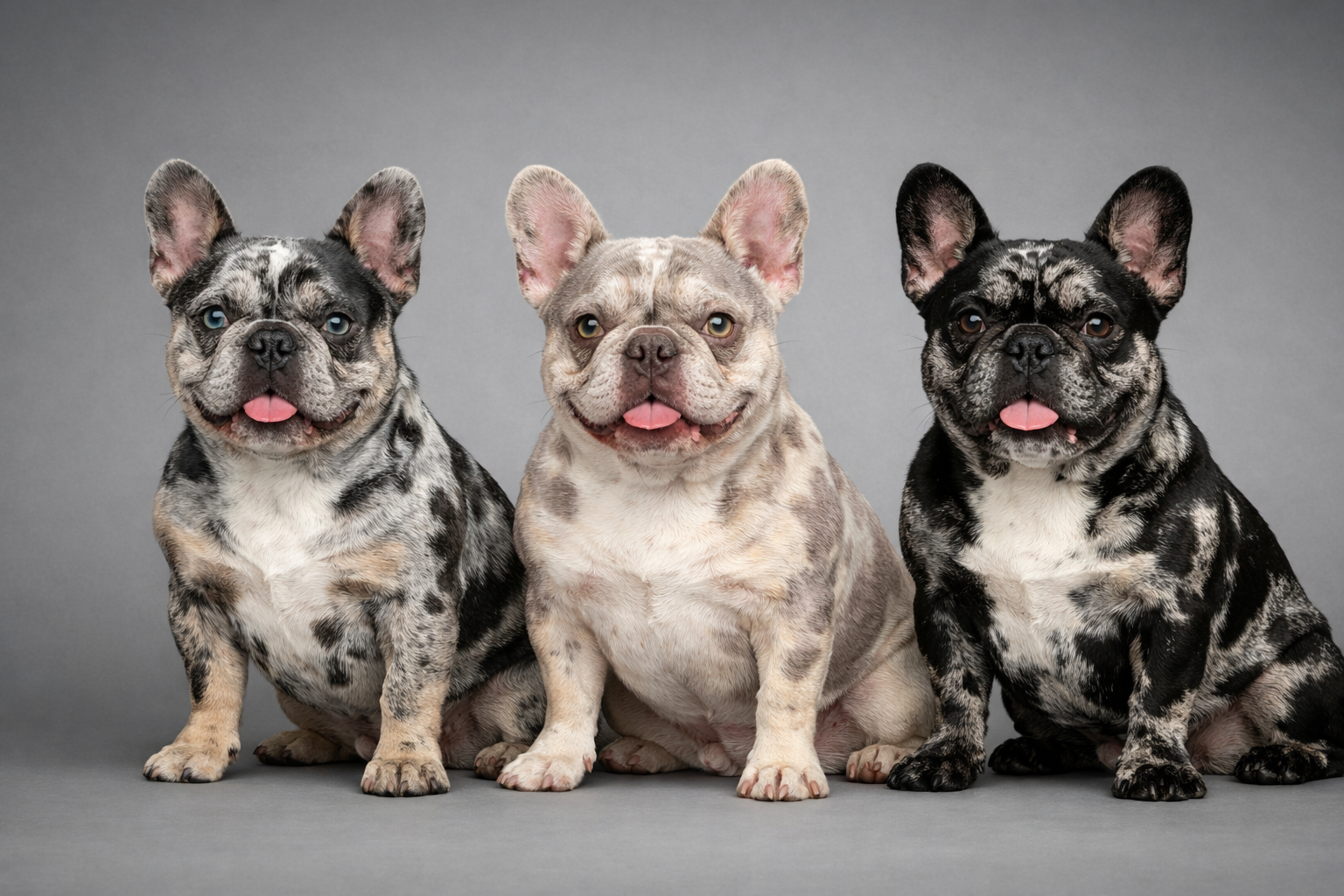
Blue merle Frenchie puppies go through rapid development in their first 12 months, and the first year sets the foundation for a healthy adult dog. Here’s a practical timeline for new owners.
First-year milestones:
- Weeks 8–12: Puppy comes home. Begin vet visits, core vaccinations, and deworming schedule. Start crate training and basic commands immediately.
- Weeks 12–16: Critical socialization window. Introduce new environments, people, and sounds gradually and positively.
- Months 4–6: Teething phase. Provide appropriate chew toys. Monitor for any respiratory symptoms and schedule BAER test if not already done.
- Months 6–9: Adolescence. Frenchies may test boundaries. Consistent, positive reinforcement training is key.
- Months 9–12: Near adult size. Schedule a full health check including ophthalmologic exam and spinal evaluation.
Puppy costs to budget for in year one:
- Initial vet visit and vaccinations: $300–$600
- Spay/neuter (if not already done): $400–$800
- BAER test (if not provided by breeder): $150–$300
- Food, crate, supplies: $500–$1,000
- Pet insurance (highly recommended): $50–$100/month
For a detailed look at what to expect when bringing home blue merle French Bulldog puppies, our expert guide to blue merle Frenchie puppies covers the full first-year roadmap.
Conclusion: Is a Blue Merle Frenchie Right for You?
The blue merle Frenchie is a genuinely striking dog — the mottled coat, pale eyes, and compact build make it one of the most visually distinctive companion dogs available in 2026. But the coat is only one part of the picture.
Before committing, take these actionable steps:
- Research breeders thoroughly. Verify DNA testing, health guarantees, and buyer references before paying any deposit.
- Budget honestly. Factor in purchase price ($5,000–$15,000+), first-year veterinary costs, and ongoing health monitoring.
- Confirm health testing. Insist on BAER results and parent DNA panels — non-negotiable for any merle puppy.
- Evaluate structure, not just color. A beautiful coat on a poorly structured dog is a recipe for expensive health problems.
- Prepare your home. Air conditioning, appropriate exercise limits, and a good vet familiar with brachycephalic breeds are all essential before the puppy arrives.
If you’re ready to move forward, explore available blue merle Frenchie puppies from health-tested bloodlines, and take the time to connect with a breeder who prioritizes structure and genetics alongside color.
FAQ
Q: Are blue merle Frenchies AKC registered?
A: Yes, blue merle French Bulldogs can be AKC registered, but merle is listed as a non-standard color. Registration is possible under non-standard color codes. AKC registration does not mean the dog meets show breed standards.
Q: Do blue merle Frenchies always have blue eyes?
A: Not always. The merle gene frequently produces blue, green, or heterochromatic (two different colored) eyes, but some blue merle Frenchies have partially or fully dark eyes depending on how the merle pattern is expressed.
Q: Is the blue merle coat pattern natural or bred artificially?
A: The merle gene is a naturally occurring genetic mutation. It is not produced through dyes or artificial means. However, merle was introduced into the French Bulldog gene pool through crossbreeding at some point in the breed’s history, which is why it’s not recognized in the AKC breed standard.
Q: What is the difference between a blue merle and a lilac merle Frenchie?
A: A blue merle carries the merle gene plus blue dilute (d/d). A lilac merle carries merle plus both blue dilute (d/d) and chocolate (b/b), producing a paler, lavender-toned coat. Lilac merles are generally rarer and more expensive.
Q: Can two blue merle Frenchies be bred together?
A: No ethical breeder does this. Breeding two merle dogs together produces a 25% chance of double merle (M/M) offspring, which face serious risks of deafness and blindness.
Q: How long do blue merle French Bulldogs live?
A: French Bulldogs generally live 10–12 years. Blue merle dogs have the same life expectancy as standard Frenchies, assuming they are free from double merle defects and receive proper veterinary care.
Q: Are blue merle Frenchies good with children?
A: Yes. French Bulldogs are known for being gentle, patient, and affectionate with children. As with any dog, supervision with very young children is always recommended.
Q: What should I feed a blue merle French Bulldog?
A: A high-quality commercial dog food formulated for small to medium breeds is appropriate. Some Frenchies do well on limited-ingredient diets if they show food sensitivities. Consult your veterinarian for specific recommendations based on your dog’s weight and health.
Q: How rare is the blue merle French Bulldog?
A: Blue merle is one of the rarer French Bulldog color patterns, which is a primary driver of its premium price. It is less common than standard blue but more available than triple-dilute colors like isabella merle.
Q: What is a blue merle fluffy Frenchie?
A: A fluffy blue merle Frenchie carries both the merle gene and the long-coat (L/L or L/l) gene, producing a blue merle dog with a longer, softer coat. These are among the most expensive Frenchie variations, often priced at $10,000–$20,000+.
References
[1] Watch (Exotic French Bulldog pricing) – https://www.youtube.com/watch?v=1D3gTZIl8TQ[3] Watch (Westminster Kennel Club Dog Show 2026) – https://www.youtube.com/watch?v=dFZAWjrZNZ0
[4] 2026 National Specialty – https://frenchbulldogclub.org/2026-national/
Tags: blue merle frenchie, blue merle French Bulldog, merle French Bulldog, French Bulldog breeder, exotic Frenchie colors, blue merle Frenchie puppies, AKC Frenchie breeders, Frenchie breeder, French Bulldog genetics, merle gene dogs, designer French Bulldogs, blue and tan merle Frenchie
🐾 Blue Merle Frenchie Buyer Checklist
Check each item before placing a deposit on a blue merle French Bulldog