

Last updated: March 15, 2026
Quick Answer: A lilac merle French Bulldog is a rare color variation of the French Bulldog breed, produced by combining the dilute gene (dd), the chocolate gene (bb), and the merle gene (M) to create a silver-lavender base coat with dappled, irregular patches. These dogs are among the most sought-after and expensive Frenchies available, typically selling for $5,000 to $10,000 or more depending on bloodlines, structure, and breeder reputation [1].
Key Takeaways
- 🐾 Lilac merle French Bulldogs carry three rare genetic markers simultaneously: dilute (dd), chocolate (bb), and merle (M locus).
- 💰 Prices range from $5,000 to $10,000+, with top bloodlines and show-quality structure pushing costs higher [1].
- 👁️ Eye color is often blue, amber, or heterochromatic (two different colors), adding to the visual appeal.
- ⚠️ Double merle breeding (merle x merle) is a serious ethical and health concern — always verify a breeder's pairing practices.
- 🏥 Lilac merle Frenchies share the same brachycephalic health risks as all French Bulldogs, including breathing and heat sensitivity.
- 🧬 The lilac coat is a recessive combination — both parents must carry the correct genes to produce lilac offspring.
- 🔍 Genetic testing from a reputable lab (such as Embark or Animal Genetics) is essential before purchasing or breeding.
- 🐶 Temperament is consistent with the French Bulldog standard — affectionate, playful, and well-suited to apartment living.
- 📋 The AKC does not recognize lilac merle as a standard color, but the dogs are still AKC-registrable as French Bulldogs.
- 🤝 Choosing an ethical, health-focused breeder is the single most important decision you'll make.
What Exactly Is a Lilac Merle French Bulldog?
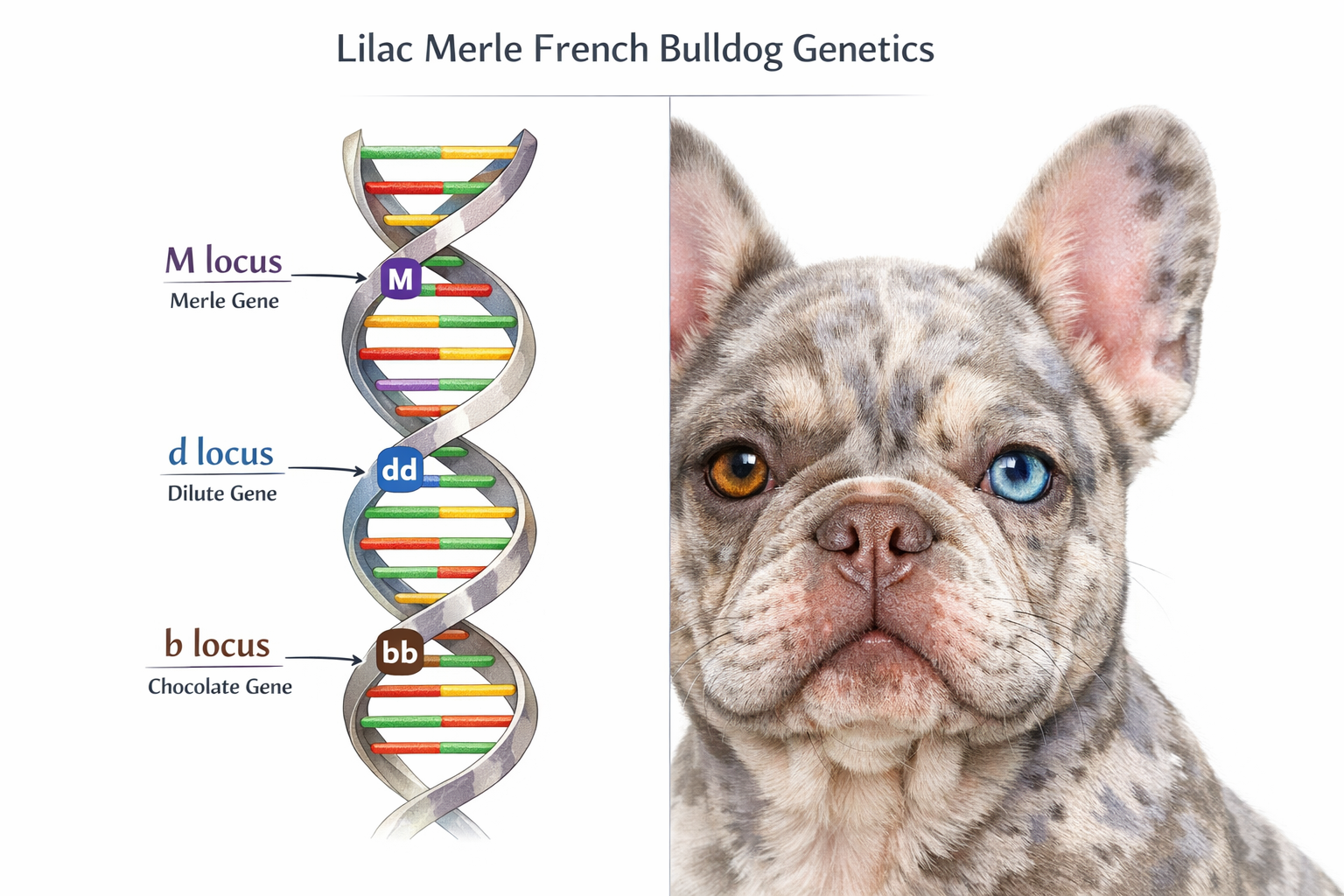
A lilac merle French Bulldog is a French Bulldog that carries two copies of the dilute gene, two copies of the chocolate gene, and at least one copy of the merle gene. The result is a coat that appears silver-lavender or dusty purple-grey, overlaid with irregular lighter or darker dappled patches created by the merle pattern.
This color combination is genuinely rare because it requires three separate genetic events to align in a single dog. The base "lilac" color (sometimes called "isabella" in other breeds) comes from diluting a chocolate coat, and the merle pattern then disrupts the pigment distribution across that base. You can explore the full genetic picture in this detailed lilac merle French Bulldog guide.
Key genetic markers:
| Gene | Symbol | Role |
|---|---|---|
| Dilute | dd (homozygous) | Lightens black pigment to blue-grey |
| Chocolate | bb (homozygous) | Shifts black pigment to brown |
| Merle | M (at least one copy) | Creates dappled, irregular patches |
The combination of dd + bb produces the lilac base. Add one merle allele (Mm) and you get a lilac merle. Two merle alleles (MM) creates a "double merle," which carries serious health risks and is considered unethical to produce intentionally.
How Does Lilac Merle Genetics Actually Work?
Understanding the genetics helps you ask better questions when evaluating breeders and litters.
The three-gene requirement means both parents must contribute specific recessive alleles. A breeder cannot produce a true lilac merle by accident — it requires deliberate, tested pairings. This is one reason the color is rare and why genetic certificates matter.
Here's how a typical ethical pairing looks:
- Parent 1: Lilac carrier (Dd or dd) + chocolate carrier (Bb or bb) + merle (Mm)
- Parent 2: Lilac (dd) + chocolate (bb) + non-merle (mm)
The resulting litter may include lilac merle puppies, lilac non-merle puppies, and other color combinations depending on the exact genetics of each parent.
Common mistake: Some buyers assume any blue-grey Frenchie with patches is a lilac merle. In reality, a blue merle French Bulldog carries the dilute gene but not the chocolate gene, producing a noticeably different, cooler-toned coat. Lilac merle has a warmer, dusty lavender quality that distinguishes it from blue merle at a glance.
Decision rule: If a breeder cannot provide DNA panel results confirming dd + bb + M locus status for both parents, do not proceed with a deposit.
What Are the Health Considerations for a Lilac Merle French Bulldog?
Lilac merle French Bulldogs face the same health challenges as all French Bulldogs, plus some merle-specific risks. Knowing these upfront helps you budget, plan, and choose a puppy with better structural odds.

Brachycephalic issues (all Frenchies):
- Narrowed nostrils (stenotic nares)
- Elongated soft palate
- Heat and exercise intolerance
- Increased anesthesia risk
For a practical breakdown of breathing, heat, and exercise management, see the lilac merle French Bulldog FAQ on breathing and heat.
Merle-specific health risks:
- Hearing loss: The merle gene can affect the development of inner ear structures. BAER (Brainstem Auditory Evoked Response) testing should be performed on all merle puppies before sale.
- Eye abnormalities: Merle dogs can develop microphthalmia (abnormally small eyes), colobomas, or increased sensitivity to light. An ophthalmology exam by a board-certified veterinary ophthalmologist is recommended.
- Double merle risk: Two merle copies (MM) significantly increases the probability of blindness and deafness. Ethical breeders never pair two merle dogs.
What to ask your breeder:
- Have both parents been DNA tested? Can I see the certificates?
- Have puppies been BAER tested?
- Has an ophthalmology exam been performed?
- What health guarantee is provided, and for how long?
Edge case: Some lilac merle puppies are "cryptic merles" — they carry the merle gene but show very minimal patterning. These dogs can still pass the merle gene to offspring, making genetic testing (not visual inspection) the only reliable method of identification.
What Does a Lilac Merle French Bulldog Look Like?
The visual appeal of a lilac merle French Bulldog is one of the main reasons demand has surged in 2026.
Coat: The base color is a muted silver-lavender or dusty mushroom-purple. Merle patches appear as lighter or slightly darker irregular swirls and blotches distributed across the body. No two dogs have identical patterns, which makes each puppy visually unique.
Eyes: This is often the first thing people notice. Lilac merle Frenchies frequently have:
- Pale blue eyes
- Amber or gold eyes
- Heterochromia (one blue, one amber)
- Partially blue irises (sectoral heterochromia)
Nose and paw pads: The nose leather is typically pink, lilac, or lavender-brown rather than black, consistent with the dilute chocolate genetics.
Body structure: Structure should follow the French Bulldog breed standard regardless of color — compact, muscular build, broad chest, flat face, and bat ears. Color should never compromise structure. A well-built lilac merle Frenchie is evaluated on the same physical criteria as any other French Bulldog. For guidance on what to look for, this resource on choosing a lilac merle French Bulldog for health, structure, and temperament is worth reading before you shop.
What Is the Temperament of a Lilac Merle French Bulldog?

The lilac merle coat is a cosmetic trait — it does not change the dog's personality. Lilac merle French Bulldogs have the same temperament as any well-bred Frenchie: affectionate, playful, moderately energetic, and strongly people-oriented.
Who this breed suits well:
- Singles and couples in apartments or smaller homes
- Families with children (with proper supervision and socialization)
- People who work from home or can limit long solo periods
- First-time dog owners who are committed to consistent training
Who should reconsider:
- Owners who want a high-energy, outdoor adventure dog
- Households where the dog will be alone for 8+ hours daily
- People unwilling to budget for regular veterinary care
Socialization matters: Lilac merle puppies benefit from early, positive exposure to different people, sounds, and environments. The socialization and confidence training guide for lilac merle Frenchie puppies covers a practical week-by-week approach for the first months at home.
"The color is what draws people in, but the personality is what keeps them devoted for life." — A common sentiment among experienced French Bulldog owners.
How Much Does a Lilac Merle French Bulldog Cost?
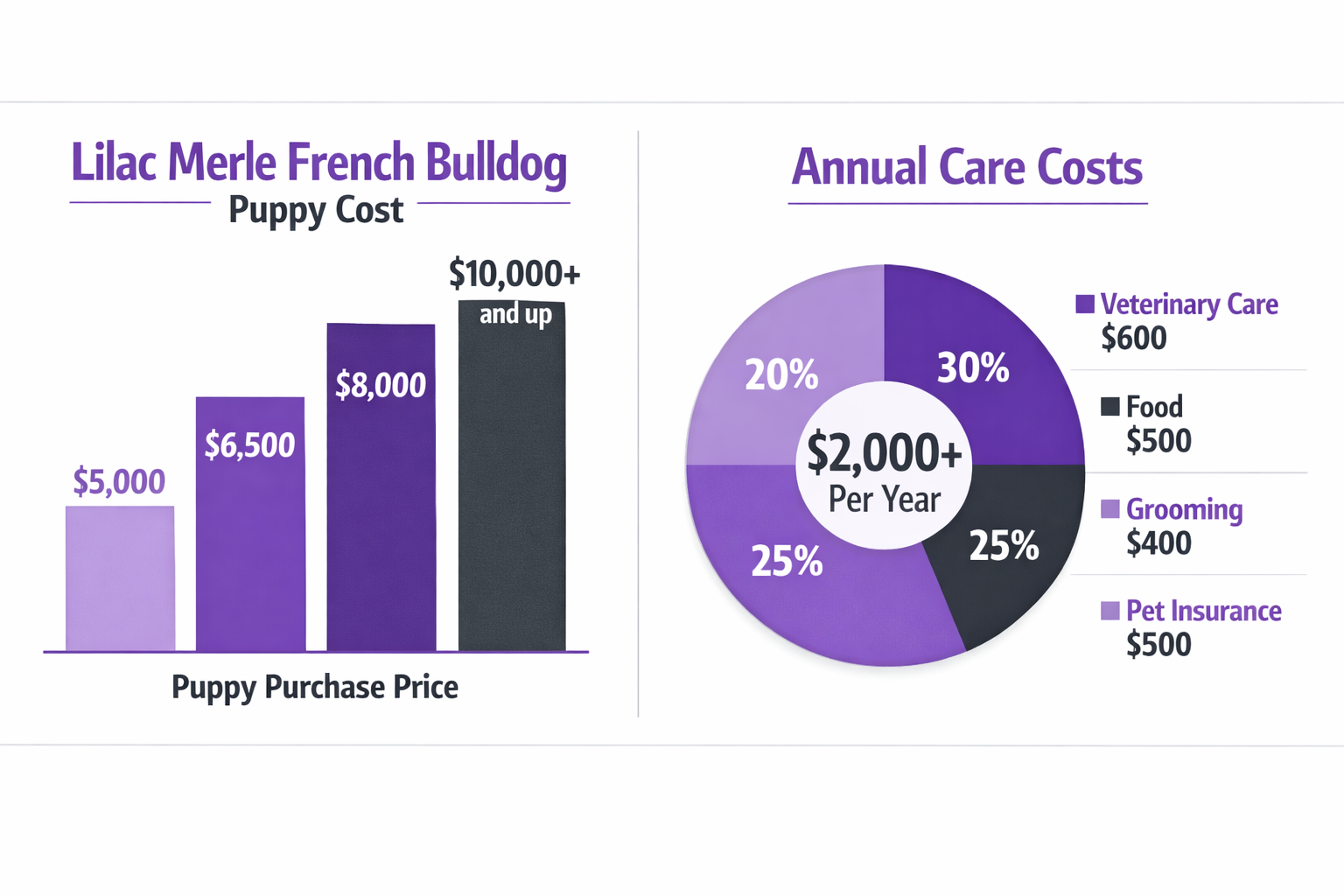
Lilac merle French Bulldogs are among the most expensive dogs in the companion animal market. Breeders report selling these puppies for $5,000 to $10,000 and above, with some exceptional bloodlines or show-quality puppies commanding even higher prices [1].
What drives the price:
- Bloodlines: Dogs from proven health-tested, championship lines cost more.
- Color rarity: The triple-gene requirement limits litter size and predictability.
- Structure quality: Well-built puppies with correct conformation are priced higher.
- Breeder reputation and testing: Health testing, BAER, ophthalmology exams, and genetic panels add cost that ethical breeders pass on appropriately [1].
- Geographic demand: Prices vary by region and current market trends.
Ongoing costs to budget for (estimates):
| Expense | Estimated Annual Cost |
|---|---|
| Veterinary care (routine) | $500 – $1,500 |
| Pet insurance | $800 – $2,000 |
| Food and supplements | $600 – $1,200 |
| Grooming | $200 – $600 |
| Potential BOAS surgery | $3,000 – $6,000 (one-time, if needed) |
For a full breakdown, see the true cost of a lilac merle French Bulldog.
Common mistake: Choosing a significantly cheaper puppy from an untested breeder to save money upfront. Veterinary costs for health problems caused by poor breeding often exceed the price difference within the first two years.
How Do You Find an Ethical Lilac Merle French Bulldog Breeder?
An ethical breeder is the foundation of a healthy, well-adjusted puppy. Here's a practical checklist for evaluating any breeder before committing.
Green flags (look for all of these):
- Full DNA panel results for both parents (dd, bb, M locus confirmed)
- BAER testing completed on merle puppies
- Ophthalmology clearance available
- Health guarantee of at least one year for genetic conditions
- References from previous buyers available
- Puppies raised in a home environment, not kennels
- Breeder asks you questions — they want to know the puppy is going to a good home
- Clear contract with return policy if you cannot keep the dog
Red flags (walk away if you see these):
- No genetic testing documentation
- Merle x merle pairings
- Puppies available immediately with no waitlist
- Pressure to pay a deposit quickly
- No in-person or video visit offered
- Price significantly below market without explanation
You can also review what responsible breeding looks like in this resource on ethical breeding of lilac merle French Bulldogs.
How Does a Lilac Merle Compare to Other Merle French Bulldog Colors?
The merle pattern appears across several French Bulldog color bases, each producing a distinct look. Understanding the differences helps you identify what you're actually looking at — and what you're paying for.
| Color | Base Genetics | Coat Appearance | Eye Color |
|---|---|---|---|
| Lilac merle | dd + bb + M | Silver-lavender with patches | Blue, amber, or heterochromatic |
| Blue merle | dd + BB/Bb + M | Steel blue-grey with patches | Often blue |
| Isabella merle | dd + bb + M (new shade) | Pale champagne-lavender | Pale blue or green |
| Rojo merle | Specific red/tan base + M | Warm red-brown with patches | Amber or hazel |
| Black merle | Standard black base + M | Black with grey/blue patches | Brown or blue |
The blue merle Frenchie is often confused with the lilac merle because both have cool-toned coats, but the absence of the chocolate gene in blue merle produces a distinctly different, less warm tone. Similarly, the isabella merle French Bulldog sits close to lilac merle on the color spectrum but typically appears lighter and more champagne-toned.
FAQ: Lilac Merle French Bulldog
Q: Is a lilac merle French Bulldog AKC registered?
A: Yes. While lilac merle is not a recognized AKC show color, the dogs can still be registered with the AKC as French Bulldogs. Registration confirms breed, not color approval.
Q: Are lilac merle French Bulldogs good with children?
A: Generally yes, with proper socialization and supervision. French Bulldogs are affectionate and playful, but their small size means rough handling by young children should be managed carefully.
Q: What is a double merle, and why is it dangerous?
A: A double merle (MM) results from breeding two merle dogs together. Puppies with two merle copies face a significantly elevated risk of blindness, deafness, and other developmental abnormalities. Ethical breeders never create double merle pairings.
Q: How long do lilac merle French Bulldogs live?
A: French Bulldogs typically live 10 to 12 years. The lilac merle color itself does not affect lifespan, but overall health — influenced heavily by breeding quality and veterinary care — does.
Q: Do lilac merle French Bulldogs shed a lot?
A: They shed moderately. Their short, fine coat is relatively low-maintenance, but regular brushing (two to three times per week) and skin fold cleaning are recommended.
Q: Can I breed my lilac merle French Bulldog?
A: Only if you commit to full genetic testing, health screening, and responsible pairing practices. Breeding merle dogs without proper knowledge and testing is how health problems proliferate in the breed.
Q: What should I feed a lilac merle French Bulldog?
A: A high-quality commercial diet formulated for small breeds, or a vet-approved raw or fresh food diet. Avoid overfeeding — Frenchies are prone to obesity, which worsens breathing problems. See nutrition and conditioning for lilac merle French Bulldogs for specifics.
Q: How much exercise does a lilac merle Frenchie need?
A: Short, moderate sessions — typically 20 to 30 minutes per day in cooler temperatures. Avoid exercise in heat or humidity, which can trigger respiratory distress.
Q: Are lilac merle French Bulldogs hypoallergenic?
A: No. No French Bulldog is hypoallergenic. They produce dander and shed, which can trigger allergies in sensitive individuals.
Q: What is the difference between lilac merle and lilac and tan merle?
A: A lilac and tan merle Frenchie also carries the tan point gene (at locus), adding distinct tan markings above the eyes, on the cheeks, chest, and legs in addition to the lilac merle base coat. This adds another layer of genetic complexity and typically increases the price further.
Conclusion
A lilac merle French Bulldog is a genuinely remarkable dog — visually striking, affectionate in personality, and the product of careful, deliberate breeding. But that rarity comes with real responsibilities for buyers.
Your actionable next steps:
- Learn the genetics before you shop. Understanding what dd + bb + M means helps you evaluate breeders honestly.
- Set a realistic budget — not just for the puppy, but for lifetime veterinary care, insurance, and potential surgical costs.
- Vet your breeder thoroughly. Request DNA panels, BAER test results, and ophthalmology clearances. Walk away from anyone who can't provide them.
- Visit or video-call before committing. See the environment, meet the parents if possible, and ask hard questions.
- Plan for the first year. Socialization, training, and early veterinary relationships set the foundation for a healthy, well-adjusted dog.
The lilac merle French Bulldog is not the right choice for every household or every budget. But for the right owner — one who goes in informed, chooses ethically, and commits to proper care — this dog offers an extraordinary combination of beauty and companionship that's hard to match.
References
[1] GPX DOGS Breeder Interview on Lilac Merle French Bulldog Pricing – https://www.youtube.com/watch?v=1D3gTZIl8TQ<!DOCTYPE html>
<html lang="en">
<head>
<meta charset="UTF-8" />
<meta name="viewport" content="width=device-width, initial-scale=1.0" />
<title>Lilac Merle French Bulldog Cost Estimator</title>
<style>
*, *::before, *::after { box-sizing: border-box; margin: 0; padding: 0; }
body {
font-family: -apple-system, BlinkMacSystemFont, 'Segoe UI', Roboto, sans-serif;
background: #f5f3f8;
padding: 20px;
color: #2d2d2d;
}
.cg-estimator-wrap {
max-width: 680px;
margin: 0 auto;
background: #ffffff;
border-radius: 16px;
box-shadow: 0 4px 24px rgba(120, 80, 160, 0.12);
overflow: hidden;
}
.cg-estimator-header {
background: linear-gradient(135deg, #7b5ea7 0%, #a78bca 100%);
padding: 28px 28px 20px;
color: #fff;
}
.cg-estimator-header h2 {
font-size: 1.35rem;
font-weight: 700;
margin-bottom: 6px;
}
.cg-estimator-header p {
font-size: 0.88rem;
opacity: 0.88;
}
.cg-estimator-body {
padding: 28px;
}
.cg-field-group {
margin-bottom: 22px;
}
.cg-field-group label {
display: block;
font-size: 0.9rem;
font-weight: 600;
color: #4a3a6b;
margin-bottom: 8px;
}
.cg-field-group select,
.cg-field-group input[type="range"] {
width: 100%;
}
.cg-field-group select {
padding: 10px 14px;
border: 2px solid #d4c8e8;
border-radius: 8px;
font-size: 0.95rem;
color: #2d2d2d;
background: #faf8ff;
appearance: none;
cursor: pointer;
outline: none;
transition: border-color 0.2s;
}
.cg-field-group select:focus {
border-color: #7b5ea7;
}
.cg-range-row {
display: flex;
align-items: center;
gap: 12px;
}
.cg-field-group input[type="range"] {
-webkit-appearance: none;
height: 6px;
border-radius: 4px;
background: #d4c8e8;
outline: none;
cursor: pointer;
flex: 1;
}
.cg-field-group input[type="range"]::-webkit-slider-thumb {
-webkit-appearance: none;
width: 20px;
height: 20px;
border-radius: 50%;
background: #7b5ea7;
cursor: pointer;
box-shadow: 0 2px 6px rgba(123,94,167,0.35);
}
.cg-range-val {
font-size: 0.9rem;
font-weight: 700;
color: #7b5ea7;
min-width: 48px;
text-align: right;
}
.cg-checkbox-group {
display: flex;
flex-direction: column;
gap: 10px;
}
.cg-checkbox-item {
display: flex;
align-items: center;
gap: 10px;
cursor: pointer;
}
.cg-checkbox-item input[type="checkbox"] {
width: 18px;
height: 18px;
accent-color: #7b5ea7;
cursor: pointer;
}
.cg-checkbox-item span {
font-size: 0.9rem;
color: #3d3050;
}
.cg-checkbox-item .cg-cost-tag {
margin-left: auto;
font-size: 0.8rem;
font-weight: 600;
color: #7b5ea7;
background: #f0eaf8;
padding: 2px 8px;
border-radius: 20px;
}
.cg-btn {
width: 100%;
padding: 14px;
background: linear-gradient(135deg, #7b5ea7, #a78bca);
color: #fff;
font-size: 1rem;
font-weight: 700;
border: none;
border-radius: 10px;
cursor: pointer;
transition: opacity 0.2s, transform 0.1s;
margin-top: 8px;
}
.cg-btn:hover { opacity: 0.92; }
.cg-btn:active { transform: scale(0.98); }
.cg-results {
display: none;
margin-top: 28px;
background: #f5f0fc;
border-radius: 12px;
padding: 22px;
border: 2px solid #d4c8e8;
}
.cg-results.cg-visible { display: block; }
.cg-results h3 {
font-size: 1.05rem;
color: #4a3a6b;
margin-bottom: 16px;
font-weight: 700;
}
.cg-result-row {
display: flex;
justify-content: space-between;
align-items: center;
padding: 9px 0;
border-bottom: 1px solid #e0d6f0;
font-size: 0.9rem;
}
.cg-result-row:last-of-type { border-bottom: none; }
.cg-result-row .cg-label { color: #5a4a7a; }
.cg-result-row .cg-value { font-weight: 700; color: #2d2d2d; }
.cg-total-row {
display: flex;
justify-content: space-between;
align-items: center;
margin-top: 14px;
padding: 14px 16px;
background: linear-gradient(135deg, #7b5ea7, #a78bca);
border-radius: 10px;
color: #fff;
}
.cg-total-row .cg-total-label { font-size: 0.95rem; font-weight: 600; }
.cg-total-row .cg-total-value { font-size: 1.25rem; font-weight: 800; }
.cg-note {
margin-top: 14px;
font-size: 0.78rem;
color: #7a6a9a;
line-height: 1.5;
}
@media (max-width: 480px) {
.cg-estimator-body { padding: 20px 16px; }
.cg-estimator-header { padding: 20px 16px 16px; }
}
</style>
</head>
<body>
<div class="cg-estimator-wrap">
<div class="cg-estimator-header">
<h2>🐾 Lilac Merle French Bulldog Cost Estimator</h2>
<p>Estimate your first-year investment based on your situation. Figures are market-based ranges, not guarantees.</p>
</div>
<div class="cg-estimator-body">
<div class="cg-field-group">
<label for="cg-puppy-tier">Puppy Quality & Bloodline Tier</label>
<select id="cg-puppy-tier">
<option value="5500">Pet quality – standard bloodlines (~$5,500)</option>
<option value="7500" selected>Mid-tier – health-tested breeder (~$7,500)</option>
<option value="10500">Premium – top bloodlines / show structure (~$10,500+)</option>
</select>
</div>
<div class="cg-field-group">
<label>Annual Vet Budget Level</label>
<div class="cg-range-row">
<input type="range" id="cg-vet-slider" min="500" max="3000" step="100" value="1000" />
<span class="cg-range-val" id="cg-vet-display">$1,000</span>
</div>
</div>
<div class="cg-field-group">
<label>Additional First-Year Costs (check all that apply)</label>
<div class="cg-checkbox-group">
<label class="cg-checkbox-item">
<input type="checkbox" class="cg-addon" data-cost="1400" checked />
<span>Pet insurance (annual)</span>
<span class="cg-cost-tag">~$1,400</span>
</label>
<label class="cg-checkbox-item">
<input type="checkbox" class="cg-addon" data-cost="900" checked />
<span>Food & supplements (annual)</span>
<span class="cg-cost-tag">~$900</span>
</label>
<label class="cg-checkbox-item">
<input type="checkbox" class="cg-addon" data-cost="400" />
<span>Grooming & supplies</span>
<span class="cg-cost-tag">~$400</span>
</label>
<label class="cg-checkbox-item">
<input type="checkbox" class="cg-addon" data-cost="600" />
<span>Training classes</span>
<span class="cg-cost-tag">~$600</span>
</label>
<label class="cg-checkbox-item">
<input type="checkbox" class="cg-addon" data-cost="4500" />
<span>BOAS airway surgery (if needed)</span>
<span class="cg-cost-tag">~$4,500</span>
</label>
<label class="cg-checkbox-item">
<input type="checkbox" class="cg-addon" data-cost="350" />
<span>Crate, bed, starter supplies</span>
<span class="cg-cost-tag">~$350</span>
</label>
</div>
</div>
<button class="cg-btn" onclick="cgCalculate()">Calculate My First-Year Cost</button>
<div class="cg-results" id="cg-results">
<h3>Your Estimated First-Year Investment</h3>
<div class="cg-result-row">
<span class="cg-label">Puppy purchase price</span>
<span class="cg-value" id="cg-r-puppy">—</span>
</div>
<div class="cg-result-row">
<span class="cg-label">Veterinary care (annual)</span>
<span class="cg-value" id="cg-r-vet">—</span>
</div>
<div class="cg-result-row">
<span class="cg-label">Selected add-ons</span>
<span class="cg-value" id="cg-r-addons">—</span>
</div>
<div class="cg-total-row">
<span class="cg-total-label">Estimated First-Year Total</span>
<span class="cg-total-value" id="cg-r-total">—</span>
</div>
<p class="cg-note">These are mid-range estimates based on 2026 U.S. market data. Actual costs vary by location, breeder, and individual dog health. Always budget a 15–20% buffer for unexpected expenses.</p>
</div>
</div>
</div>
<script>
const vetSlider = document.getElementById('cg-vet-slider');
const vetDisplay = document.getElementById('cg-vet-display');
vetSlider.addEventListener('input', function() {
vetDisplay.textContent = '$' + Number(this.value).toLocaleString();
});
function cgCalculate() {
const puppyPrice = Number(document.getElementById('cg-puppy-tier').value);
const vetCost = Number(vetSlider.value);
let addonTotal = 0;
document.querySelectorAll('.cg-addon').forEach(function(cb) {
if (cb.checked) {
addonTotal += Number(cb.dataset.cost);
}
});
const grandTotal = puppyPrice + vetCost + addonTotal;
document.getElementById('cg-r-puppy').textContent = '$' + puppyPrice.toLocaleString();
document.getElementById('cg-r-vet').textContent = '$' + vetCost.toLocaleString();
document.getElementById('cg-r-addons').textContent = '$' + addonTotal.toLocaleString();
document.getElementById('cg-r-total').textContent = '$' + grandTotal.toLocaleString();
const results = document.getElementById('cg-results');
results.classList.add('cg-visible');
results.scrollIntoView({ behavior: 'smooth', block: 'nearest' });
}
</script>
</body>
</html>
Tags: lilac merle french bulldog, merle french bulldog, french bulldog colors, rare french bulldog, french bulldog genetics, french bulldog breeder, merle frenchie, french bulldog health, designer french bulldog, blue merle frenchie, french bulldog price, brachycephalic dog care