

Last updated: March 15, 2026
Quick Answer: A lilac merle frenchie is a French Bulldog that carries both the double dilution genes (d/d + b/b) and the merle gene (M/m), producing a coat with a soft lilac base broken up by mottled silver, gray, and pale lavender patches. These dogs are classified as "ultra" rare, priced between $15,000 and $30,000, and require specialized breeding knowledge to produce responsibly [1].
Key Takeaways
- 🐾 The lilac merle coloring comes from a specific genetic combination: d/d + b/b + M/m (double dilution plus merle)
- 💜 The coat shows a lilac base with mottled merle patterning — often paired with blue or light-colored eyes
- 💰 Expect to pay $15,000–$30,000 from a reputable breeder; prices below this range are a red flag [1]
- 🧬 Responsible breeders never breed merle to merle — double merle puppies face serious risks of blindness and deafness
- 🏥 Health testing and genetic screening are non-negotiable for this color variant
- 📋 The AKC does not recognize merle as a standard French Bulldog color, but the dogs are still registerable
- 🔍 Always verify a breeder's health testing records, genetic panel results, and references before purchasing
- 🐶 Temperament is the same as any well-bred Frenchie — affectionate, playful, and adaptable to apartment living
- ⚠️ "Double merle" puppies (M/M) are a serious ethical concern and a sign of irresponsible breeding
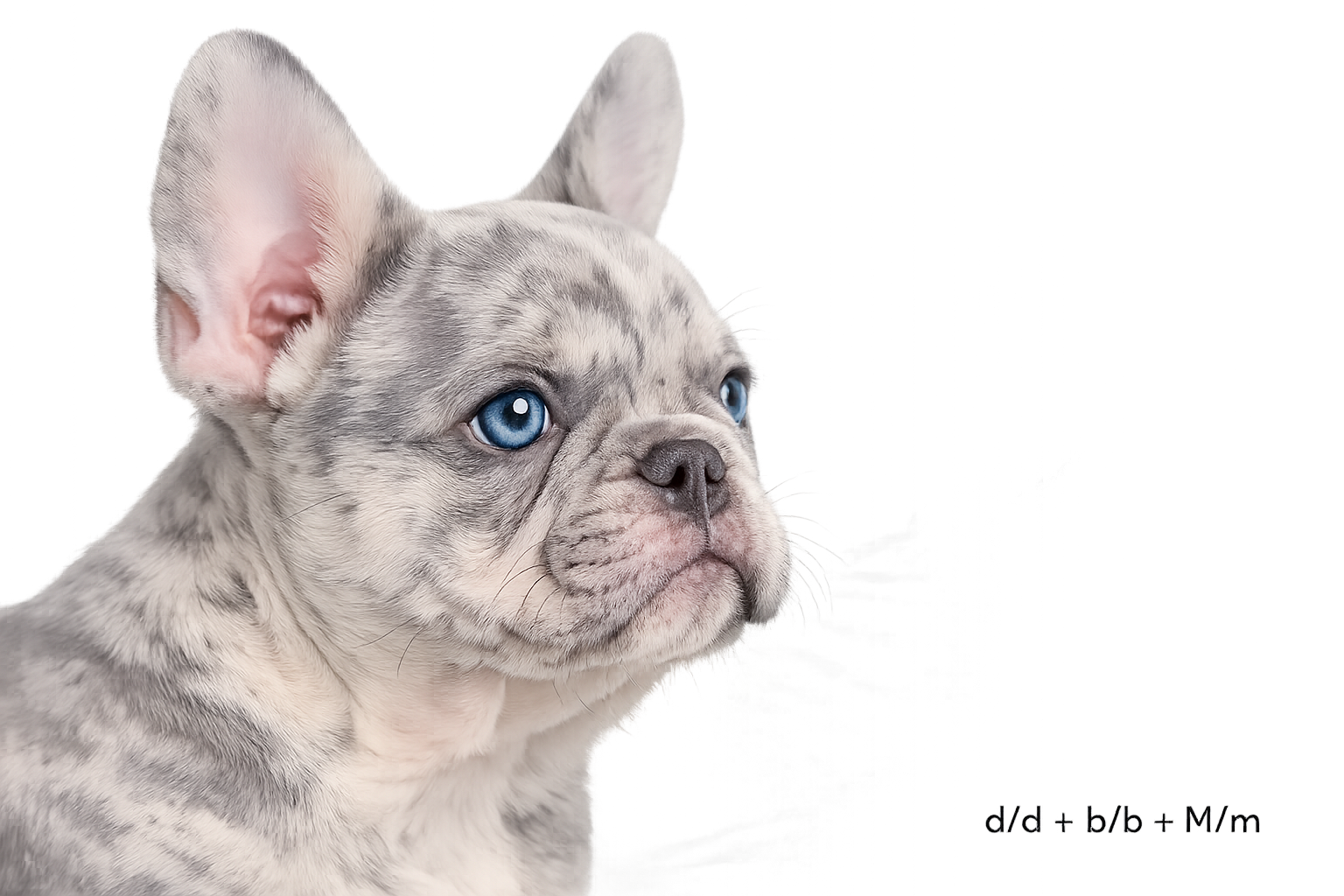
What Exactly Is a Lilac Merle Frenchie?
A lilac merle frenchie is a French Bulldog whose coat combines two rare genetic events at once: the lilac dilution and the merle pattern. The result is a dog that looks unlike almost any other Frenchie you'll encounter.
The lilac base color comes from inheriting two copies of both the blue dilution gene (d/d) and the chocolate/brown gene (b/b). Add the merle gene (M/m) on top of that, and the coat develops irregular patches of lighter and darker pigment — a mottled, almost painterly effect in shades of silver, pale lavender, and soft gray.
Key visual traits of a lilac merle French Bulldog include:
- Coat: Lilac base with irregular lighter and darker merle patches
- Eyes: Often blue, green, or heterochromatic (two different colors)
- Nose: Typically pale pink or liver-toned, not the standard black
- Skin: Light-pigmented, sometimes with visible pink undertones around the muzzle and paws
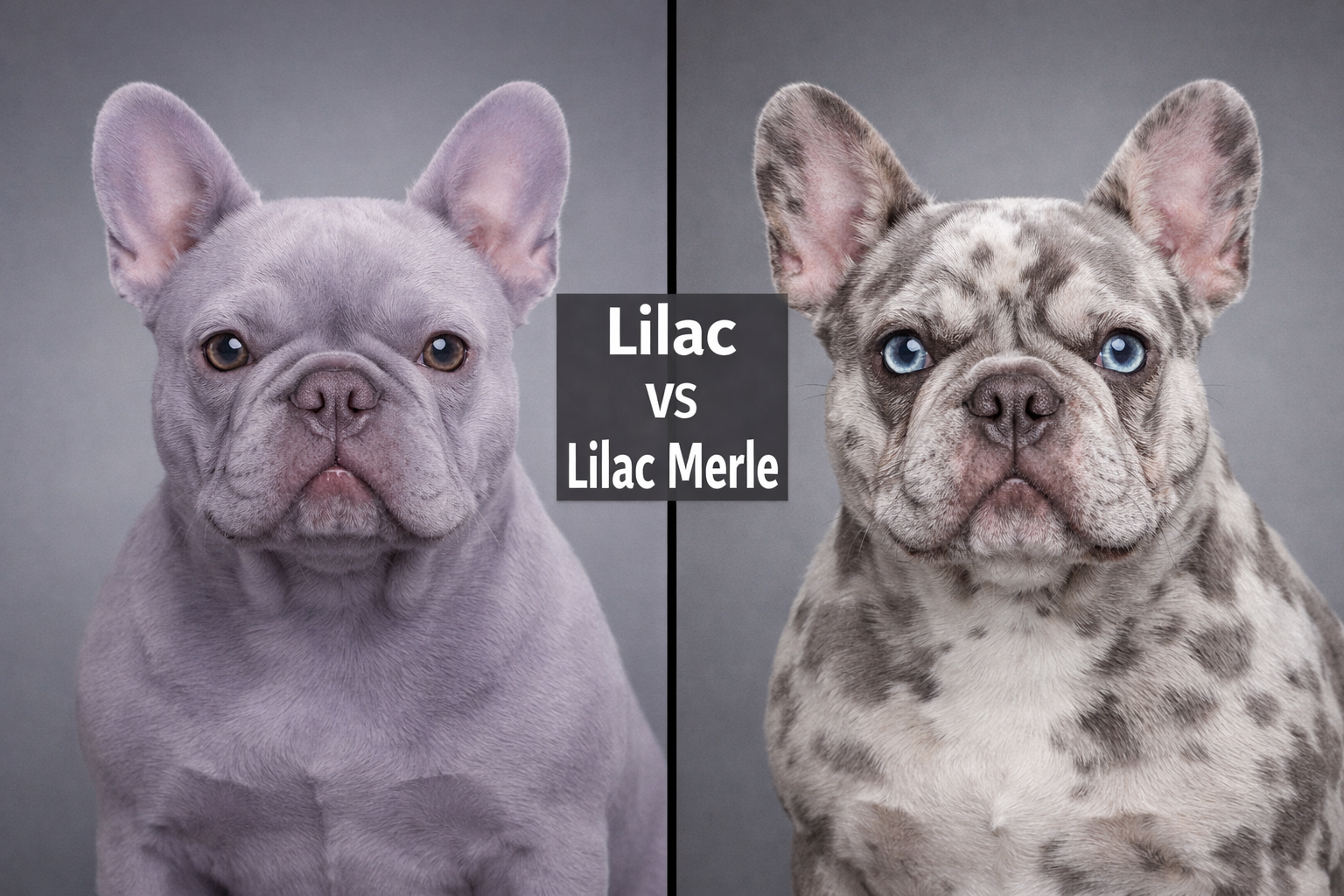
For a deeper look at the visual and genetic differences between a solid lilac and a lilac merle, see this comparison of lilac merle vs. lilac French Bulldogs.
"The lilac merle is not just a color — it's a precise genetic outcome that requires both the right parent selection and responsible health testing to produce safely."
What Genetics Produce the Lilac Merle Color?
The lilac merle coloring is produced by three genetic markers working together: d/d + b/b + M/m [1]. Each piece of this puzzle matters.
Here's how the genetics break down:
| Gene | What It Does | Required Copies |
|---|---|---|
| d/d (blue dilution) | Dilutes black pigment to blue/gray | Two copies (homozygous) |
| b/b (chocolate/brown) | Dilutes eumelanin to brown/lilac | Two copies (homozygous) |
| M/m (merle) | Creates irregular light/dark patches | One copy (heterozygous) |
The merle gene must be present in only one copy (M/m). A dog that inherits two copies of the merle gene (M/M) — called a "double merle" — faces a significantly elevated risk of serious health problems, including partial or full blindness, deafness, and microphthalmia (abnormally small eyes) [1].
This is why responsible breeders never pair two merle-carrying dogs together. A merle-to-merle breeding gives each puppy in the litter a 25% statistical chance of being double merle. For more on the genetics and ethics behind this color, the lilac merle color genetics and breeder ethics guide is worth reading before you start your search.
Choose this color if: You want a visually striking, genetically unique dog and are prepared to invest in health testing and a reputable breeder.
Avoid if: You're looking for a bargain — low prices in this color almost always signal corner-cutting on genetics or health.
How Much Does a Lilac Merle Frenchie Cost?
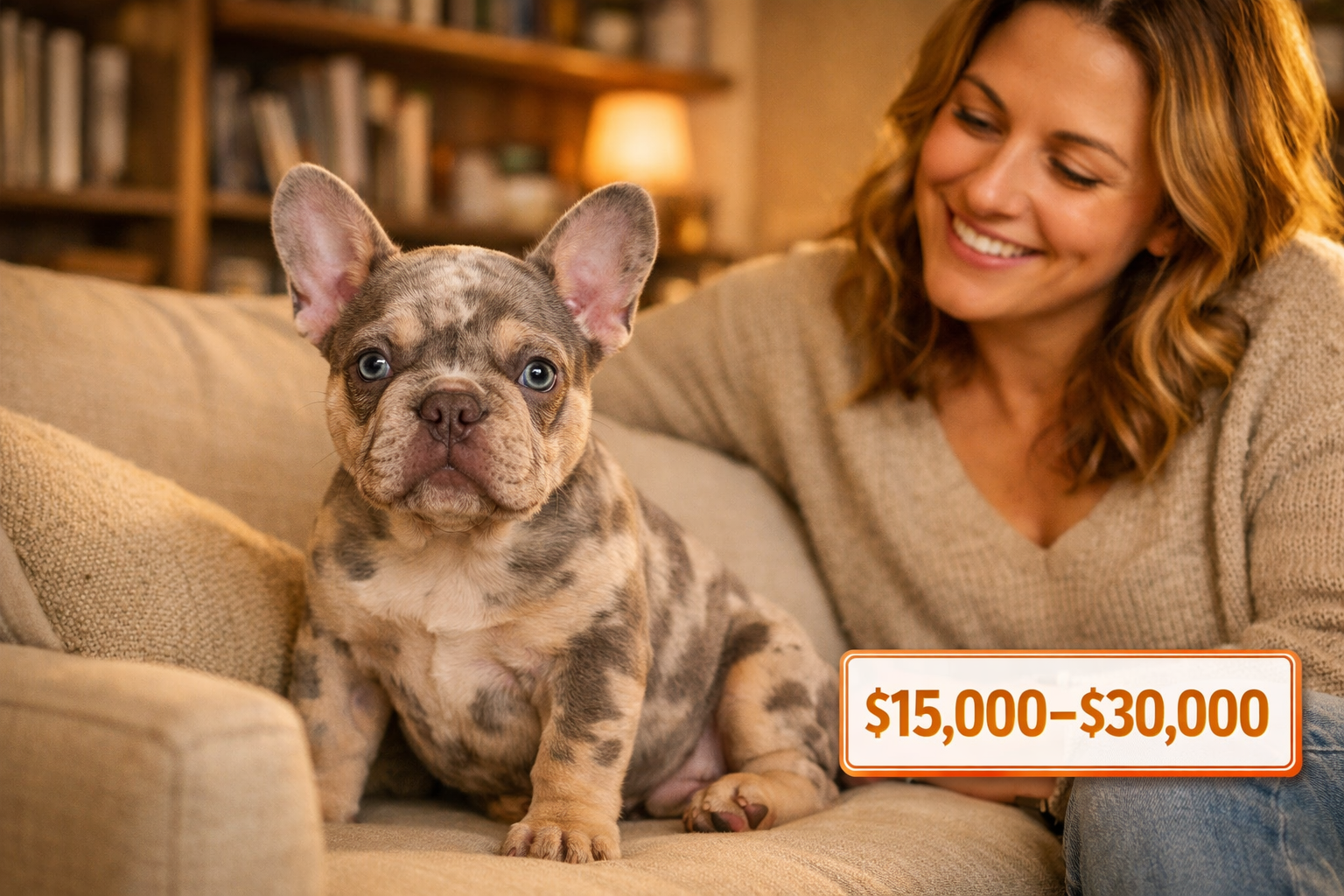
Lilac merle French Bulldogs are priced between $15,000 and $30,000 from reputable breeders [1]. This makes them one of the most expensive color variants in the entire French Bulldog world.
Several factors drive the price this high:
- Rarity of the genetics: Producing the correct d/d + b/b + M/m combination requires careful parent selection and genetic testing across multiple generations
- Small litter sizes: French Bulldogs typically require artificial insemination and C-sections, adding significant veterinary costs
- Health testing: Responsible breeders invest in OFA certifications, genetic panels, ophthalmology exams, and BAER (hearing) testing
- Demand outpacing supply: Lilac merle is classified as "ultra" rare, meaning fewer dogs are available than buyers seeking them [1]
For a full breakdown of what drives pricing, see the true cost of a lilac merle French Bulldog.
Common mistake: Buyers who find a "lilac merle" puppy listed for $3,000–$6,000 often discover the dog is miscolored, mislabeled, or from a breeder who skipped genetic testing. The price range exists for a reason.

What Health Issues Should Lilac Merle Frenchie Owners Know About?
Like all French Bulldogs, lilac merle Frenchies are a brachycephalic breed — meaning their flat face creates structural breathing challenges. The merle gene adds a layer of health considerations specific to this color.
Brachycephalic concerns (all Frenchies):
- Brachycephalic Obstructive Airway Syndrome (BOAS)
- Heat sensitivity and overheating risk
- Difficulty with strenuous exercise
Merle-specific concerns:
- Ocular defects: Merle dogs can have smaller or malformed eyes, especially if double merle
- Hearing loss: BAER testing should be performed on all merle puppies to screen for deafness
- Skin sensitivity: Light-pigmented skin is more prone to sunburn and irritation
Before purchasing, ask your breeder for:
- ✅ BAER hearing test results for the puppy
- ✅ Ophthalmology clearance
- ✅ OFA hip and cardiac evaluations on both parents
- ✅ Full genetic panel confirming M/m (not M/M) status
- ✅ Confirmation that neither parent is merle (or that only one parent carries the merle gene)
For a detailed vet and insurance planning guide specific to this color, the vet and insurance roadmap for lilac merle Frenchies covers what to budget and which specialists to have on call. Also see the lilac merle French Bulldog FAQs on breathing, heat, and exercise for practical day-to-day management.
Lilac Merle Frenchie vs. Other Merle Colors: How Do They Compare?
The merle pattern appears across several French Bulldog color variants. The lilac merle is one of the rarest, but it helps to understand how it sits alongside the others.
| Color Variant | Base Color | Eye Color | Rarity | Approx. Price Range |
|---|---|---|---|---|
| Lilac Merle | Lilac/silver-lavender | Blue, green, odd-eyed | Ultra rare | $15,000–$30,000 |
| Blue Merle | Blue/gray | Blue or brown | Very rare | $8,000–$20,000 |
| Isabella Merle | Warm pale fawn/lilac | Light blue or hazel | Ultra rare | $15,000–$30,000 |
| Chocolate Merle | Brown/chocolate | Green or hazel | Rare | $8,000–$15,000 |
| Black Merle | Black with patches | Brown or blue | Rare | $6,000–$12,000 |
The blue merle French Bulldog is the most commonly seen merle variant, while the lilac merle and isabella merle French Bulldog sit at the top of the rarity and price spectrum.
If you're comparing the lilac merle to a blue merle Frenchie, the key visual difference is warmth: lilac merles have a distinctly purple-silver tone, while blue merles lean cooler and grayer. Blue merle frenchie puppies are also somewhat more available, making them a slightly more accessible entry point into the merle color family.
How Do I Find a Reputable Lilac Merle Frenchie Breeder?
Finding a responsible breeder is the single most important step in this process. Because lilac merle breeding requires specialized knowledge [1], the pool of genuinely qualified breeders is small.
What a reputable breeder will always do:
- Provide a full genetic panel for both parents, confirming color genetics and merle status
- Perform BAER hearing tests and ophthalmology exams on merle puppies
- Never breed merle to merle
- Offer a written health guarantee
- Welcome questions about their breeding program and allow you to visit or video-call
- Be transparent about waitlists — ethical breeders rarely have puppies immediately available
Red flags to walk away from:
- Prices significantly below the $15,000–$30,000 range without explanation [1]
- No health testing documentation
- Unwillingness to share parent genetic results
- Multiple litters always available with no waitlist
- Pressure to purchase quickly
For guidance on what to look for when evaluating breeders and puppies, the guide to choosing a lilac merle French Bulldog based on health, structure, and temperament is an excellent resource.
What Is It Like to Own a Lilac Merle Frenchie Day to Day?
The lilac merle frenchie has the same core temperament as any well-bred French Bulldog: affectionate, sociable, moderately playful, and well-suited to apartment or urban living.
Daily care basics:
- Exercise: 20–30 minutes of moderate activity per day; avoid heat and humidity
- Grooming: Short coat requires minimal brushing, but skin folds need regular cleaning to prevent irritation
- Diet: High-quality protein-forward diet; this breed is prone to food allergies and weight gain
- Socialization: Early socialization is critical — start during the puppy stage for a confident, well-adjusted adult
For families with busy schedules, raising lilac merle Frenchie puppies in busy homes offers practical routines that work. And for socialization specifically, the lilac merle Frenchie puppies socialization and confidence training guide covers the key developmental windows.
Edge case: The light skin pigmentation common in lilac merles means sun exposure can cause sunburn on the nose and ear tips. In warm climates, limit midday outdoor time and consider pet-safe sunscreen for exposed areas.
Conclusion: Is a Lilac Merle Frenchie Right for You?
The lilac merle frenchie is one of the most visually striking dogs you can own — and one of the most demanding to acquire responsibly. If you're drawn to this color, the investment goes beyond the purchase price. It includes choosing a breeder who prioritizes genetics and health testing, budgeting for ongoing veterinary care, and committing to the specific needs of a brachycephalic dog.
Actionable next steps:
- Research genetics first. Understand what d/d + b/b + M/m means before you contact any breeder.
- Build your breeder shortlist. Look for breeders who share health test results publicly and have verifiable references.
- Get on a waitlist early. Ethical breeders often have waitlists of 6–18 months for lilac merle puppies.
- Find a vet before the puppy arrives. Identify a brachycephalic-experienced veterinarian in your area ahead of time.
- Budget realistically. Factor in purchase price, first-year vet costs, pet insurance, food, and supplies.
If you do the groundwork, a lilac merle French Bulldog can be a deeply rewarding companion. The rarity of the color is real — but so is the responsibility that comes with it.
Frequently Asked Questions
Q: Are lilac merle French Bulldogs AKC registered?
A: Yes, they can be registered with the AKC as French Bulldogs, but merle is not a recognized standard color. Registration does not imply the dog meets breed standard color requirements.
Q: What is a double merle, and why is it a problem?
A: A double merle (M/M) is a dog that inherited the merle gene from both parents. This significantly increases the risk of blindness, deafness, and eye malformations. Responsible breeders never produce double merles intentionally.
Q: How do I verify a puppy's genetic color?
A: Ask for a genetic panel from a reputable canine DNA lab (such as Embark or UC Davis Veterinary Genetics Laboratory) that confirms the specific alleles for color and merle status.
Q: Do lilac merle Frenchies have more health problems than other Frenchies?
A: They share the same brachycephalic health concerns as all French Bulldogs. The merle gene adds potential ocular and hearing risks, which is why BAER and ophthalmology testing are essential before purchase.
Q: Can I breed my lilac merle Frenchie?
A: Only with the guidance of an experienced, ethical breeder. Never breed a merle dog to another merle dog. Breeding this color variant without proper genetic knowledge risks producing double merle puppies with serious health defects.
Q: How long is the waitlist for a lilac merle puppy?
A: From ethical breeders, expect a waitlist of 6–18 months. Shorter availability is often a sign of high-volume or irresponsible breeding.
Q: What eye colors do lilac merle Frenchies have?
A: Most commonly blue, but also green, amber, or heterochromatic (one blue eye, one brown or green). Eye color varies by individual.
Q: Is the lilac merle color stable — does it change as the puppy grows?
A: The merle pattern can shift slightly in intensity as a puppy matures, but the base color and patterning remain consistent. Some puppies appear lighter at birth and develop more visible contrast by adulthood.
Q: Are lilac merle Frenchies good with children and other pets?
A: Yes, when properly socialized from puppyhood. French Bulldogs are generally gentle and adaptable. Early exposure to children and other animals is key.
Q: What's the difference between a lilac merle and an isabella merle?
A: Both are ultra-rare dilute merle variants, but isabella merles carry a slightly different genetic expression that produces a warmer, more fawn-toned base compared to the cooler silver-lavender of the lilac merle.
References
[1] Best Frenchie Breeder – https://www.designerfrenchbulldogs.com/best-frenchie-breeder/<!DOCTYPE html>
<html lang="en">
<head>
<meta charset="UTF-8" />
<meta name="viewport" content="width=device-width, initial-scale=1.0" />
<title>Lilac Merle Frenchie Cost & Readiness Calculator</title>
<style>
*, *::before, *::after { box-sizing: border-box; margin: 0; padding: 0; }
body {
font-family: -apple-system, BlinkMacSystemFont, 'Segoe UI', Roboto, sans-serif;
background: #f7f4fb;
color: #2d2d2d;
padding: 20px;
}
.cg-calc-wrapper {
max-width: 680px;
margin: 0 auto;
background: #ffffff;
border-radius: 16px;
box-shadow: 0 4px 24px rgba(120, 80, 160, 0.12);
overflow: hidden;
}
.cg-calc-header {
background: linear-gradient(135deg, #8b5cf6, #a78bfa);
color: #fff;
padding: 28px 32px;
text-align: center;
}
.cg-calc-header h2 {
font-size: 1.4rem;
font-weight: 700;
margin-bottom: 6px;
}
.cg-calc-header p {
font-size: 0.9rem;
opacity: 0.88;
}
.cg-calc-body {
padding: 28px 32px;
}
.cg-section-label {
font-size: 0.75rem;
font-weight: 700;
text-transform: uppercase;
letter-spacing: 0.08em;
color: #8b5cf6;
margin-bottom: 14px;
margin-top: 24px;
}
.cg-section-label:first-child { margin-top: 0; }
.cg-field {
margin-bottom: 16px;
}
.cg-field label {
display: block;
font-size: 0.88rem;
font-weight: 600;
color: #444;
margin-bottom: 6px;
}
.cg-field input[type="range"] {
width: 100%;
accent-color: #8b5cf6;
cursor: pointer;
}
.cg-field .cg-range-display {
display: flex;
justify-content: space-between;
font-size: 0.78rem;
color: #888;
margin-top: 3px;
}
.cg-field .cg-range-value {
font-size: 0.95rem;
font-weight: 700;
color: #8b5cf6;
margin-top: 2px;
}
.cg-checkbox-group {
display: grid;
grid-template-columns: 1fr 1fr;
gap: 10px;
}
.cg-checkbox-item {
display: flex;
align-items: center;
gap: 8px;
background: #f3f0fa;
border-radius: 8px;
padding: 10px 12px;
cursor: pointer;
transition: background 0.2s;
}
.cg-checkbox-item:hover { background: #ede9fc; }
.cg-checkbox-item input[type="checkbox"] {
accent-color: #8b5cf6;
width: 16px;
height: 16px;
cursor: pointer;
}
.cg-checkbox-item span {
font-size: 0.83rem;
font-weight: 500;
color: #333;
}
.cg-checkbox-item .cg-cost-tag {
margin-left: auto;
font-size: 0.75rem;
color: #8b5cf6;
font-weight: 600;
white-space: nowrap;
}
.cg-btn {
display: block;
width: 100%;
background: linear-gradient(135deg, #8b5cf6, #7c3aed);
color: #fff;
border: none;
border-radius: 10px;
padding: 14px;
font-size: 1rem;
font-weight: 700;
cursor: pointer;
margin-top: 24px;
transition: opacity 0.2s, transform 0.1s;
}
.cg-btn:hover { opacity: 0.92; transform: translateY(-1px); }
.cg-btn:active { transform: translateY(0); }
.cg-result-box {
display: none;
margin-top: 24px;
background: #f3f0fa;
border-radius: 12px;
padding: 22px 24px;
border-left: 4px solid #8b5cf6;
}
.cg-result-box.cg-visible { display: block; }
.cg-result-total {
font-size: 1.6rem;
font-weight: 800;
color: #7c3aed;
margin-bottom: 4px;
}
.cg-result-subtitle {
font-size: 0.85rem;
color: #666;
margin-bottom: 16px;
}
.cg-result-breakdown {
list-style: none;
margin-bottom: 16px;
}
.cg-result-breakdown li {
display: flex;
justify-content: space-between;
font-size: 0.85rem;
padding: 5px 0;
border-bottom: 1px solid #e5dff7;
color: #444;
}
.cg-result-breakdown li:last-child { border-bottom: none; }
.cg-readiness-bar-wrap {
margin-top: 14px;
}
.cg-readiness-label {
font-size: 0.82rem;
font-weight: 600;
color: #555;
margin-bottom: 6px;
}
.cg-bar-bg {
background: #ddd6f7;
border-radius: 999px;
height: 12px;
overflow: hidden;
}
.cg-bar-fill {
height: 100%;
border-radius: 999px;
background: linear-gradient(90deg, #8b5cf6, #6d28d9);
transition: width 0.6s ease;
}
.cg-readiness-verdict {
margin-top: 10px;
font-size: 0.88rem;
font-weight: 600;
padding: 10px 14px;
border-radius: 8px;
}
.cg-verdict-ready { background: #d1fae5; color: #065f46; }
.cg-verdict-almost { background: #fef3c7; color: #92400e; }
.cg-verdict-notyet { background: #fee2e2; color: #991b1b; }
@media (max-width: 480px) {
.cg-calc-body { padding: 20px 18px; }
.cg-checkbox-group { grid-template-columns: 1fr; }
.cg-calc-header { padding: 22px 18px; }
}
</style>
</head>
<body>
<div class="cg-calc-wrapper">
<div class="cg-calc-header">
<h2>💜 Lilac Merle Frenchie Cost & Readiness Calculator</h2>
<p>Estimate your first-year investment and see how prepared you are to bring one home.</p>
</div>
<div class="cg-calc-body">
<div class="cg-section-label">Step 1: Puppy Purchase Price</div>
<div class="cg-field">
<label>Expected purchase price</label>
<input type="range" id="cg-purchase" min="10000" max="30000" step="500" value="20000" oninput="cg_updatePurchase()" />
<div class="cg-range-display">
<span>$10,000</span>
<span class="cg-range-value" id="cg-purchase-val">$20,000</span>
<span>$30,000</span>
</div>
</div>
<div class="cg-section-label">Step 2: First-Year Care Costs (select all that apply)</div>
<div class="cg-checkbox-group">
<label class="cg-checkbox-item">
<input type="checkbox" id="cg-vet" checked />
<span>Vet visits & vaccines</span>
<span class="cg-cost-tag">+$800</span>
</label>
<label class="cg-checkbox-item">
<input type="checkbox" id="cg-insurance" checked />
<span>Pet insurance (annual)</span>
<span class="cg-cost-tag">+$1,200</span>
</label>
<label class="cg-checkbox-item">
<input type="checkbox" id="cg-food" checked />
<span>Premium food</span>
<span class="cg-cost-tag">+$900</span>
</label>
<label class="cg-checkbox-item">
<input type="checkbox" id="cg-supplies" />
<span>Supplies & bedding</span>
<span class="cg-cost-tag">+$400</span>
</label>
<label class="cg-checkbox-item">
<input type="checkbox" id="cg-training" />
<span>Puppy training classes</span>
<span class="cg-cost-tag">+$600</span>
</label>
<label class="cg-checkbox-item">
<input type="checkbox" id="cg-grooming" />
<span>Grooming & skin care</span>
<span class="cg-cost-tag">+$350</span>
</label>
<label class="cg-checkbox-item">
<input type="checkbox" id="cg-emergency" />
<span>Emergency fund reserve</span>
<span class="cg-cost-tag">+$2,000</span>
</label>
<label class="cg-checkbox-item">
<input type="checkbox" id="cg-boarding" />
<span>Boarding / dog sitting</span>
<span class="cg-cost-tag">+$700</span>
</label>
</div>
<div class="cg-section-label">Step 3: Your Readiness Checklist</div>
<div class="cg-checkbox-group">
<label class="cg-checkbox-item">
<input type="checkbox" class="cg-ready-check" />
<span>Verified breeder genetics</span>
</label>
<label class="cg-checkbox-item">
<input type="checkbox" class="cg-ready-check" />
<span>Found a brachycephalic vet</span>
</label>
<label class="cg-checkbox-item">
<input type="checkbox" class="cg-ready-check" />
<span>Researched merle health risks</span>
</label>
<label class="cg-checkbox-item">
<input type="checkbox" class="cg-ready-check" />
<span>Budget fully set aside</span>
</label>
<label class="cg-checkbox-item">
<input type="checkbox" class="cg-ready-check" />
<span>Home puppy-proofed</span>
</label>
<label class="cg-checkbox-item">
<input type="checkbox" class="cg-ready-check" />
<span>Family / household on board</span>
</label>
</div>
<button class="cg-btn" onclick="cg_calculate()">Calculate My Total & Readiness Score</button>
<div class="cg-result-box" id="cg-result">
<div class="cg-result-total" id="cg-total-display">$0</div>
<div class="cg-result-subtitle">Estimated first-year total investment</div>
<ul class="cg-result-breakdown" id="cg-breakdown"></ul>
<div class="cg-readiness-bar-wrap">
<div class="cg-readiness-label">Readiness Score: <span id="cg-ready-pct">0%</span></div>
<div class="cg-bar-bg"><div class="cg-bar-fill" id="cg-bar" style="width:0%"></div></div>
</div>
<div class="cg-readiness-verdict" id="cg-verdict"></div>
</div>
</div>
</div>
<script>
function cg_updatePurchase() {
const val = parseInt(document.getElementById('cg-purchase').value);
document.getElementById('cg-purchase-val').textContent = '$' + val.toLocaleString();
}
function cg_calculate() {
const purchase = parseInt(document.getElementById('cg-purchase').value);
const costs = [
{ id: 'cg-vet', label: 'Vet visits & vaccines', amount: 800 },
{ id: 'cg-insurance', label: 'Pet insurance (annual)', amount: 1200 },
{ id: 'cg-food', label: 'Premium food', amount: 900 },
{ id: 'cg-supplies', label: 'Supplies & bedding', amount: 400 },
{ id: 'cg-training', label: 'Puppy training classes', amount: 600 },
{ id: 'cg-grooming', label: 'Grooming & skin care', amount: 350 },
{ id: 'cg-emergency', label: 'Emergency fund reserve', amount: 2000 },
{ id: 'cg-boarding', label: 'Boarding / dog sitting', amount: 700 },
];
let careTotal = 0;
const breakdown = [];
breakdown.push({ label: 'Puppy purchase price', amount: purchase });
costs.forEach(c => {
const el = document.getElementById(c.id);
if (el && el.checked) {
careTotal += c.amount;
breakdown.push({ label: c.label, amount: c.amount });
}
});
const grandTotal = purchase + careTotal;
const readyChecks = document.querySelectorAll('.cg-ready-check');
let readyCount = 0;
readyChecks.forEach(r => { if (r.checked) readyCount++; });
const readyPct = Math.round((readyCount / readyChecks.length) * 100);
document.getElementById('cg-total-display').textContent = '$' + grandTotal.toLocaleString();
const breakdownEl = document.getElementById('cg-breakdown');
breakdownEl.innerHTML = '';
breakdown.forEach(item => {
const li = document.createElement('li');
li.innerHTML = '<span>' + item.label + '</span><span>$' + item.amount.toLocaleString() + '</span>';
breakdownEl.appendChild(li);
});
const totalLi = document.createElement('li');
totalLi.style.fontWeight = '700';
totalLi.style.color = '#7c3aed';
totalLi.innerHTML = '<span>Estimated Total (Year 1)</span><span>$' + grandTotal.toLocaleString() + '</span>';
breakdownEl.appendChild(totalLi);
document.getElementById('cg-ready-pct').textContent = readyPct + '%';
document.getElementById('cg-bar').style.width = readyPct + '%';
const verdictEl = document.getElementById('cg-verdict');
if (readyPct >= 83) {
verdictEl.textContent = '✅ You're well-prepared! You've covered the key bases for responsible ownership.';
verdictEl.className = 'cg-readiness-verdict cg-verdict-ready';
} else if (readyPct >= 50) {
verdictEl.textContent = '⚠️ Almost there — a few more steps before committing to a purchase.';
verdictEl.className = 'cg-readiness-verdict cg-verdict-almost';
} else {
verdictEl.textContent = '❌ More preparation needed. Review the checklist items before contacting breeders.';
verdictEl.className = 'cg-readiness-verdict cg-verdict-notyet';
}
const resultBox = document.getElementById('cg-result');
resultBox.classList.add('cg-visible');
resultBox.scrollIntoView({ behavior: 'smooth', block: 'nearest' });
}
</script>
</body>
</html>
Tags: lilac merle frenchie, lilac merle French Bulldog, merle French Bulldog, French Bulldog colors, rare Frenchie colors, French Bulldog breeder, merle genetics, French Bulldog health, designer French Bulldogs, lilac French Bulldog, Frenchie puppies, brachycephalic dog care