

Last updated: March 15, 2026
Quick Answer: A blue merle French Bulldog is a French Bulldog carrying the merle (M) gene, which creates a dappled, patchwork coat of silver-blue, charcoal, and white. These dogs share the same compact, affectionate temperament as standard Frenchies but carry rare color genetics that make them highly sought after — and significantly more expensive. Prices typically range from $8,000 to $30,000+ depending on bloodline, structure, and color rarity [2].
- Display 9 Products per page
Key Takeaways
- The blue merle coat results from the merle gene acting on a dilute (blue) base coat, producing a dappled silver-blue and charcoal pattern
- Blue merle French Bulldogs are not AKC-standard colors but are fully recognized within the specialty and designer breeding community
- Prices range from $8,000 to $30,000+ for rare color variations; standard Frenchies run $3,000–$6,000 [2]
- Double merle breeding (merle × merle) is a serious health risk and must be avoided — responsible breeders never do it
- Genetic testing through certified labs is non-negotiable for reputable blue merle Frenchie breeders [1]
- Common health concerns include brachycephalic airway issues, blue alopecia (in dilute coats), and eye sensitivity
- Life expectancy is 10–14 years with proper care [1]
- The merle gene can combine with other dilutes (lilac, isabella, rojo) to create additional rare color variations
- Always verify health clearances, genetic panels, and breeder reputation before purchasing
- Fluffy carrier genes can also be present in merle lines, creating long-coat merle Frenchies with exceptional visual appeal [1]
What Exactly Is a Blue Merle French Bulldog?
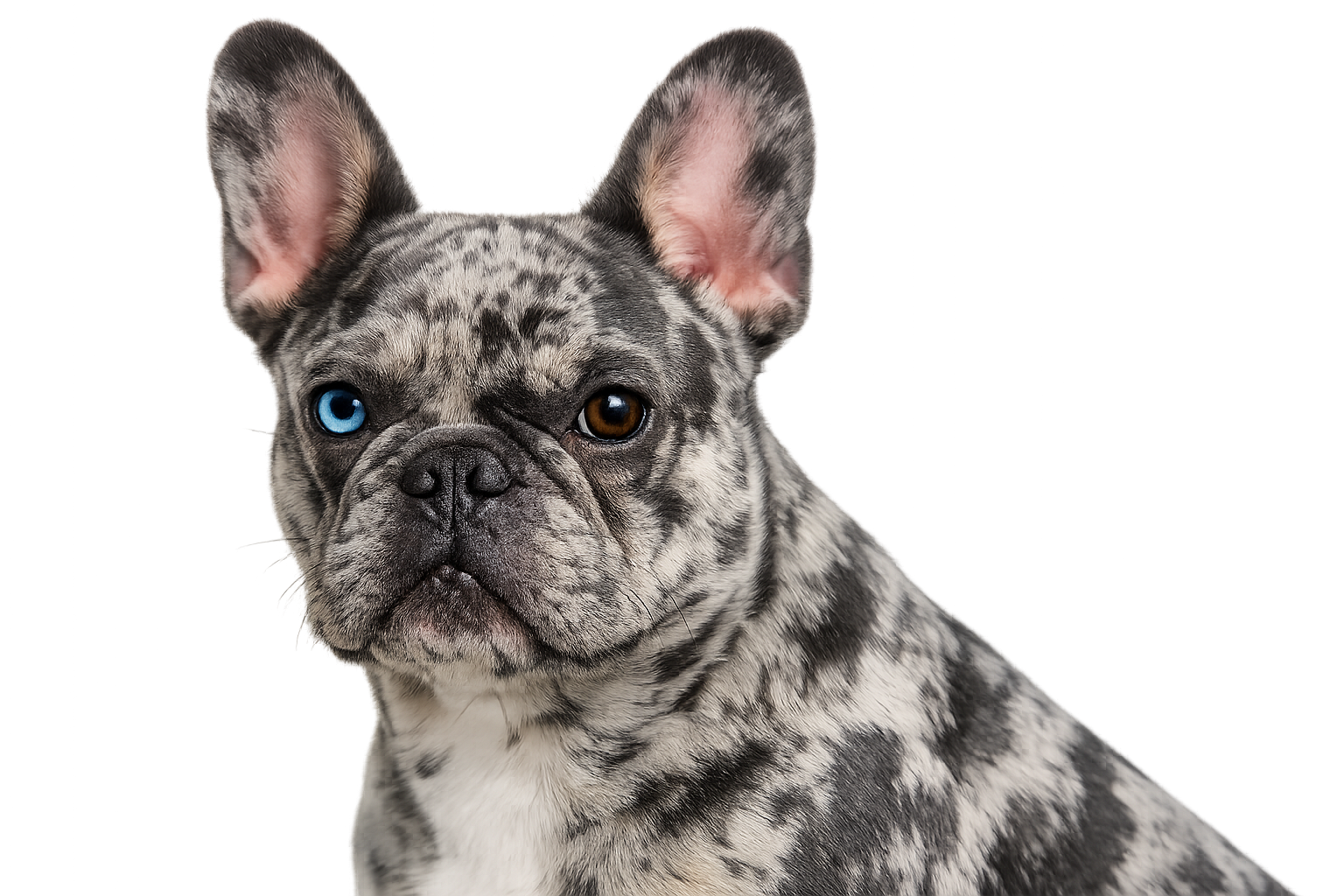
A blue merle French Bulldog is a Frenchie whose coat carries the merle gene (M locus) on top of a dilute blue base. The result is a mottled, patchwork pattern of silver-blue, dark charcoal, and often white — sometimes paired with striking blue or heterochromatic (two different colored) eyes.
The “blue” in the name refers to the dilute gene (d/d) that turns black pigment into a cool grey-blue shade. When the merle gene overlays this dilute base, it randomly suppresses pigment in patches, creating the signature dappled look. No two blue merle Frenchies look exactly alike, which is part of their appeal.
Key visual traits of a blue merle French Bulldog:
- Dappled silver-blue and charcoal coat patches
- Often blue, green, or heterochromatic eyes
- Bat ears (standard Frenchie structure)
- Compact, muscular body — same as any well-bred French Bulldog
- Possible white markings on chest, face, or paws
“The merle pattern doesn’t change the dog’s personality — it changes the canvas. Underneath that striking coat is the same loyal, playful Frenchie temperament.”
For a deeper look at the full range of blue merle Frenchie variations available, the blue merle French Bulldog overview at Designer French Bulldogs is an excellent starting point.
How Does the Merle Gene Work in French Bulldogs?
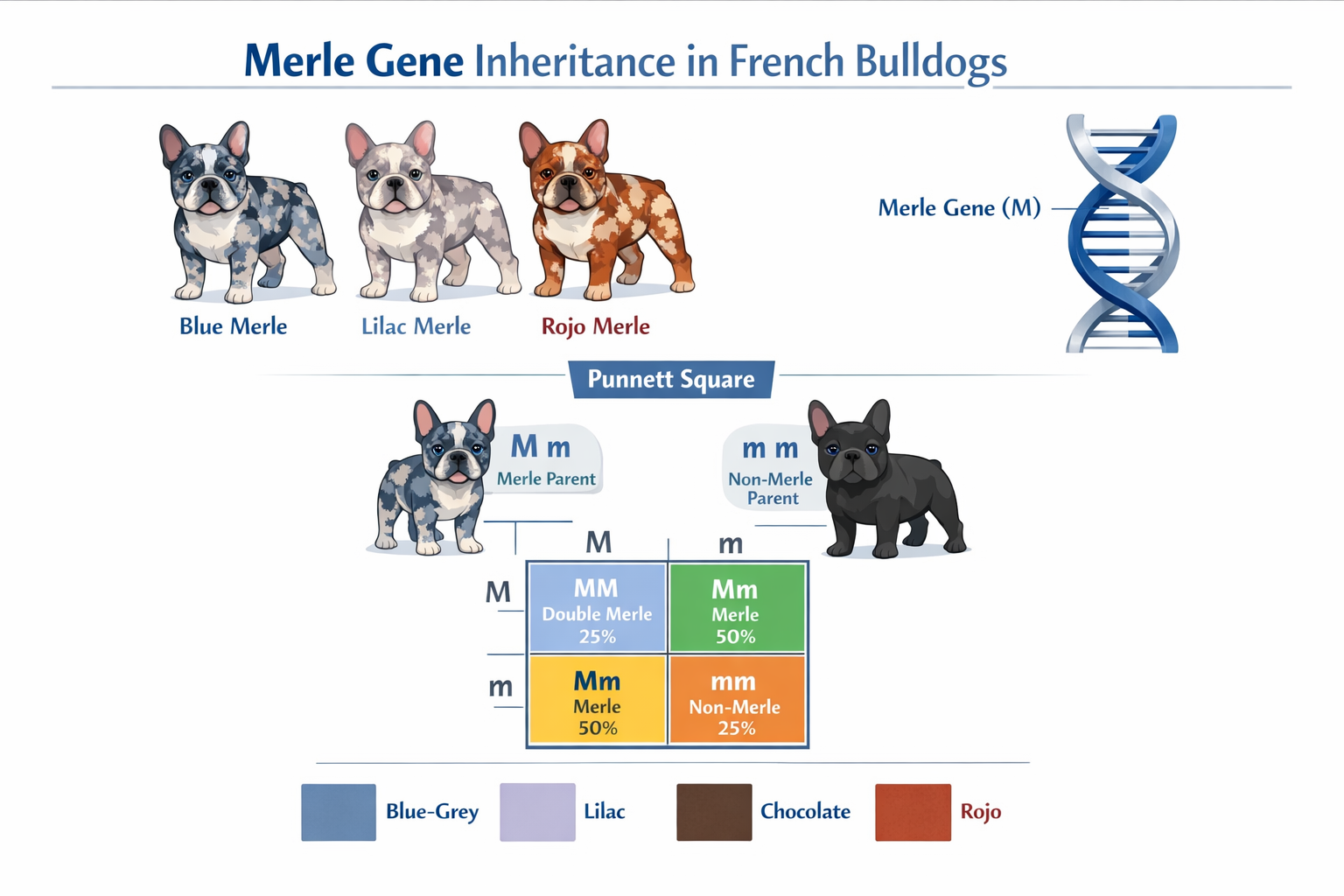
The merle gene is a dominant modifier — one copy (Mm) produces a merle-patterned dog, while two copies (MM) creates a “double merle,” which carries serious health risks. This is the most critical genetic concept any blue merle Frenchie buyer needs to understand.
Merle gene basics:
| Genotype | Result | Health Risk |
|---|---|---|
| mm (no merle) | Solid or standard coat | None from merle gene |
| Mm (single merle) | Merle pattern | Low, if bred responsibly |
| MM (double merle) | Excessive white, merle pattern | High — blindness, deafness |
Reputable breeders always pair a merle dog with a non-merle partner. Genetic testing through certified labs (such as Animal Genetics) confirms each dog’s merle status before any breeding decision [1].
The merle gene can combine with other color genes to produce additional rare variations:
- Blue merle (merle + dilute)
- Lilac merle (merle + dilute + brown)
- Isabella merle (merle + triple dilute)
- Rojo merle (merle + chocolate/red tones)
- Black merle (merle on a non-dilute base)
Each combination produces a visually distinct dog. If you’re curious about how lilac merle compares, see this lilac merle French Bulldog guide for a side-by-side breakdown.
What Colors and Variations Exist Beyond the Classic Blue Merle?
The blue merle French Bulldog is one of several merle color expressions in the breed. Understanding the full spectrum helps buyers choose the right variation and avoid paying a premium for a misrepresented color.
Merle French Bulldog color variations:
- Blue merle — Silver-blue and charcoal dappling; the most recognized merle variation
- Lilac merle — Soft lavender-grey patches; combines dilute and brown genes with merle
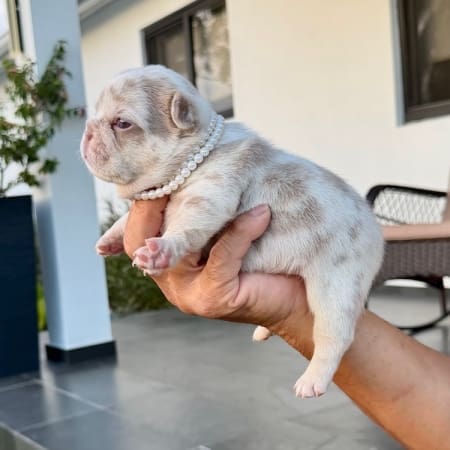
- Isabella merle — A pale rosy-gold or champagne tone; a “triple dilute” combining dilute, brown, and coco genetics [1]
- New Shade Isabella — A distinct variation with a warm rosy-gold glow, even lighter than traditional isabella merle [1]
- Rojo merle — Warm red-brown dappling; chocolate/red base with merle overlay
- New Shade Rojo — A deeper, richer rojo variation with enhanced red pigmentation
- Cocoa merle — Brown-based merle with warm chocolate tones
- Black merle — Dark charcoal and black dappling on a non-dilute base
- Fluffy merle — Any merle color combined with the long-coat (L4) gene, producing a soft, medium-length coat [1]
The merle French Bulldog color guide covers all these variations in detail, including how to visually distinguish one from another.
Choose a variation based on:
- Your aesthetic preference (cool blue-grey tones vs. warm rojo/isabella tones)
- Availability from health-tested breeding programs
- Budget — isabella and new shade variations typically command the highest prices
How Much Does a Blue Merle French Bulldog Cost?
Blue merle French Bulldogs cost significantly more than standard-colored Frenchies. Standard French Bulldogs with good pedigree typically sell for $3,000–$6,000 [2]. Blue merle and other rare color variations range from $8,000 to $30,000+, depending on bloodline, structure, color rarity, and breeder reputation [2].
What drives the price up:
- Rarity of the color combination (isabella and new shade variations are the most expensive)
- Structural quality — a well-built, typey Frenchie costs more regardless of color
- Health testing — genetic panels, vet clearances, and health guarantees add cost but protect the buyer
- Fluffy carrier or fluffy merle status — long-coat merle Frenchies carry a premium
- Breeder reputation and geographic location
Limited AKC registration puppies from specialty breeders are often priced around $5,000 at the lower end of the rare-color spectrum, with full breeding rights commanding significantly more [1].
Common mistake: Buyers sometimes find “blue merle” puppies at unusually low prices ($1,500–$3,000). This is a red flag. Legitimate blue merle Frenchie puppies from health-tested parents cannot be produced and sold profitably at those prices. Low-cost merle Frenchies often come from breeders who skip genetic testing — raising the risk of double merle health issues.
For a transparent breakdown of pricing across merle variations, the merle French Bulldog price guide is worth reading before you contact any breeder.

What Health Issues Should Blue Merle French Bulldog Owners Know About?
Blue merle French Bulldogs share the brachycephalic health profile of all Frenchies, plus a few color-specific concerns. Life expectancy is 10–14 years with proper care [1].
Health concerns common to all French Bulldogs:
- Brachycephalic Obstructive Airway Syndrome (BOAS) — narrowed nostrils, elongated soft palate
- Spinal issues (hemivertebrae) — more common in screw-tailed breeds
- Heat intolerance — Frenchies cannot regulate body temperature well in hot weather
- Skin fold dermatitis — requires regular cleaning of facial folds
- Hip dysplasia and joint issues
Color-specific concerns for blue merle Frenchies:
- Merle-related eye issues — single merle (Mm) dogs can have increased sensitivity; double merle (MM) dogs face serious risk of blindness and deafness
- Blue alopecia (Color Dilution Alopecia) — a documented concern in dilute-coated dogs; responsible breeders report no incidents when combining high-quality nutrition with genetic testing [1]
Preventive steps every owner should take:
- Confirm the puppy is a single merle (Mm), not double merle (MM) — ask for genetic test results
- Schedule a vet exam within 72 hours of bringing the puppy home
- Feed a high-quality diet appropriate for brachycephalic breeds
- Avoid exercise in heat above 75°F (24°C)
- Keep facial folds clean and dry daily
- Annual vet checkups including eye and spinal screening
Genetic testing is standard practice among reputable breeders. Certified labs like Animal Genetics are commonly used, and responsible programs require outside studs to be tested and clear of genetic issues before any breeding occurs [1].
How to Find a Reputable Blue Merle French Bulldog Breeder
Finding a trustworthy blue merle Frenchie breeder takes research. The French Bulldog community is active in 2026, with events like the French Bulldog Club of America’s National Specialty (scheduled for November 1–7, 2026, judged by Ms. Patty Sosa) [3] and breed judging at the Westminster Kennel Club Dog Show in February 2026 [4] providing opportunities to meet serious breeders in person.
What a reputable breeder will always provide:
- Genetic testing results for both parents (merle status, dilute genes, health panels)
- Health guarantee (minimum 1–2 years for genetic conditions)
- Vet records and vaccination history for the puppy
- References from previous buyers
- Transparency about the breeding program and parent dogs
Red flags to avoid:
- No genetic testing documentation
- Unwilling to let you visit or video-call to see the puppy and facility
- Pressure to buy quickly or pay a large deposit before seeing health records
- Prices that seem too low for the color claimed
- Multiple litters always available (volume breeding without health focus)
The blue merle Frenchie breeders professional playbook outlines exactly what standards serious breeders follow — useful reading whether you’re a buyer or a breeder.
For buyers specifically looking for blue merle Frenchie puppies, the blue merle French Bulldog puppies page covers what to expect from the purchase process, from deposit to delivery.

Is a Blue Merle French Bulldog the Right Dog for You?
Blue merle French Bulldogs make excellent companions for the right owner. They’re affectionate, adaptable to apartment living, and relatively low-exercise compared to working breeds. But they’re not the right fit for everyone.
Choose a blue merle Frenchie if you:
- Want a loyal, low-exercise companion dog
- Live in a climate-controlled home (Frenchies struggle in heat)
- Can budget for higher veterinary costs — brachycephalic breeds often need airway or spinal interventions
- Are prepared for the higher upfront cost of a rare-color, health-tested puppy
- Want a visually striking dog with a genuinely unique coat
A blue merle Frenchie may not suit you if you:
- Want a high-energy outdoor or hiking companion
- Live in a hot climate without air conditioning
- Are on a tight budget for both purchase and ongoing vet care
- Are looking for a dog that can be left alone for long hours regularly
Temperament snapshot:
- Playful and clownish indoors
- Bonds strongly with one or two people
- Generally good with children and other pets when socialized early
- Moderate barking — not a nuisance barker
- Stubborn at times during training — patience and positive reinforcement work best
FAQ: Blue Merle French Bulldog
Q: Are blue merle French Bulldogs AKC-recognized?
The merle color pattern is not accepted in the AKC French Bulldog breed standard. Blue merle Frenchies can receive AKC registration but cannot be shown in conformation under standard AKC rules. They are fully recognized within specialty and designer breeding communities.
Q: What makes a blue merle different from a blue French Bulldog?
A blue French Bulldog has a solid or near-solid dilute grey-blue coat. A blue merle has the merle gene on top of that blue base, creating a dappled, patchwork pattern with lighter and darker patches.
Q: Can two merle French Bulldogs be bred together?
No. Breeding two merle dogs (Mm × Mm) produces double merle puppies (MM) with a high risk of blindness and deafness. Responsible breeders always pair a merle with a non-merle dog.
Q: How long do blue merle French Bulldogs live?
Life expectancy is 10–14 years with proper nutrition, veterinary care, and a climate-appropriate lifestyle [1].
Q: What is a fluffy blue merle French Bulldog?
A fluffy blue merle Frenchie carries both the merle gene and the long-coat (L4/L4 or L4/l) gene, producing a medium-length soft coat over the dappled merle pattern. These are among the most visually striking — and most expensive — Frenchie variations [1].
Q: How do I verify a puppy is a single merle, not a double merle?
Ask the breeder for genetic test results from a certified lab (such as Animal Genetics) confirming the puppy’s merle status. A single merle puppy will show as Mm; a double merle will show as MM.
Q: Are blue merle Frenchies good with kids?
Yes, when properly socialized from puppyhood. Their compact size and gentle temperament make them well-suited to family life. Supervision is still recommended with very young children, as with any dog.
Q: What’s the difference between blue merle and lilac merle?
Blue merle combines the merle gene with the dilute (blue) gene. Lilac merle adds the brown gene as well, producing a softer lavender-grey tone. See the lilac merle Frenchie guide for a visual comparison.
Q: Do blue merle French Bulldogs shed a lot?
Standard blue merle Frenchies have a short, smooth coat with moderate shedding. Fluffy merle variations shed more due to the longer coat length. Regular brushing (2–3 times per week) manages shedding for both coat types.
Q: What should I feed a blue merle French Bulldog?
A high-quality, protein-rich diet formulated for small to medium brachycephalic breeds is ideal. Avoid foods with artificial fillers. Some breeders recommend raw or fresh food diets to support coat health and reduce the risk of color dilution alopecia [1].
Conclusion
The blue merle French Bulldog is one of the most visually striking companion dogs available in 2026 — a combination of the beloved Frenchie temperament and a genuinely rare, eye-catching coat. But owning one responsibly starts long before the puppy comes home.
Your actionable next steps:
- Research breeders thoroughly — ask for genetic testing documentation, health guarantees, and parent dog records before committing to any deposit
- Understand the genetics — confirm your puppy is a single merle (Mm), not a double merle (MM)
- Budget honestly — factor in the purchase price ($8,000–$30,000+), vet costs, quality food, and potential airway or spinal interventions over a 10–14 year lifespan
- Visit or video-call the breeder — see the facility and meet at least one parent dog
- Schedule a vet exam immediately — within 72 hours of bringing your blue merle Frenchie home
If you’re ready to explore available puppies, the blue merle Frenchie page at Designer French Bulldogs is a strong starting point for finding health-tested, responsibly bred blue merle French Bulldog puppies from a program that takes genetics seriously.
References
[2] French Bulldog Pricing Analysis (March 2026) – https://www.youtube.com/watch?v=1D3gTZIl8TQ[3] 2026 French Bulldog National Specialty – https://frenchbulldogclub.org/2026-national/
[4] Westminster Kennel Club Dog Show 2026 – https://www.youtube.com/watch?v=dFZAWjrZNZ0